CAS 52200-69-8
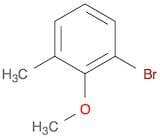
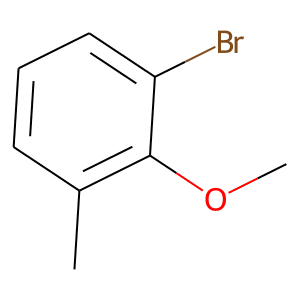
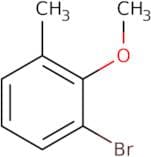
:Benzene, 1-bromo-2-methoxy-3-methyl-
Description:
Benzene, 1-bromo-2-methoxy-3-methyl-, also known by its CAS number 52200-69-8, is an organic compound characterized by a benzene ring substituted with a bromine atom, a methoxy group (-OCH3), and a methyl group (-CH3). This compound is part of the class of aromatic compounds, which are known for their stability and unique reactivity due to the delocalized π-electrons in the benzene ring. The presence of the bromine atom introduces electrophilic properties, making it a potential candidate for further chemical reactions, such as nucleophilic substitution. The methoxy group is an electron-donating group, which can influence the reactivity and orientation of electrophilic substitution reactions on the benzene ring. Additionally, the methyl group can affect the compound's physical properties, such as boiling and melting points, as well as its solubility in various solvents. Overall, this compound exhibits typical characteristics of substituted aromatic compounds, including distinct reactivity patterns and potential applications in organic synthesis and materials science.
Formula:C8H9BrO
Sort by
Purity (%)
0
100
|
0
|
50
|
90
|
95
|
100
Found 4 products.
3-Bromo-2-methoxytoluene
CAS:Formula:C8H9BrOPurity:96%Color and Shape:LiquidMolecular weight:201.06052-Bromo-6-methylanisole
CAS:<p>2-Bromo-6-methylanisole</p>Formula:C8H9BrOPurity:98%Color and Shape: clear. colourless liquidMolecular weight:201.06g/mol2-Bromo-6-methylanisole
CAS:Formula:C8H9BrOPurity:96%Color and Shape:Liquid, ClearMolecular weight:201.0632-Bromo-6-methylanisole
CAS:2-Bromo-6-methylanisole is a sulfoxide that is synthesized by the reaction of aniline with bromine and methanesulfonic acid. 2-Bromo-6-methylanisole has significant antibacterial activity against a range of bacterial species, including methicillin-resistant Staphylococcus aureus (MRSA). It has also been shown to be active against Gram positive bacteria, such as Bacillus cereus and Clostridium perfringens. 2-Bromo-6-methylanisole can be used in strategies to produce structurally analogues, such as halobenzenes or nitrobenzenes. It is also chiral and amenable to asymmetric synthesis.Formula:C8H9BrOPurity:Min. 95%Molecular weight:201.06 g/mol