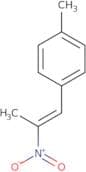
CAS 52287-56-6
:4-Methyl-b-methyl-b-nitrostyrene
Description:
4-Methyl-β-methyl-β-nitrostyrene, identified by its CAS number 52287-56-6, is an organic compound characterized by its structure, which includes a styrene backbone with methyl and nitro substituents. This compound typically exhibits a yellow to orange color and is known for its aromatic properties due to the presence of the styrene moiety. The nitro group contributes to its reactivity, making it a potential candidate for various chemical reactions, including electrophilic aromatic substitution. It is generally insoluble in water but soluble in organic solvents, which is common for many nitro-substituted aromatic compounds. The presence of the methyl groups can influence its physical properties, such as melting and boiling points, as well as its stability and reactivity. Safety data indicates that, like many nitro compounds, it should be handled with care due to potential toxicity and environmental concerns. Overall, 4-Methyl-β-methyl-β-nitrostyrene is of interest in organic synthesis and materials science, particularly in the development of polymers and other advanced materials.
Formula:C10H11NO2
InChI:InChI=1/C10H11NO2/c1-8-3-5-10(6-4-8)7-9(2)11(12)13/h3-7H,1-2H3/b9-7-
SMILES:Cc1ccc(cc1)/C=C(/C)\N(=O)=O
Synonyms:- 1-methyl-4-[(1Z)-2-nitroprop-1-en-1-yl]benzene
Sort by
Purity (%)
0
100
|
0
|
50
|
90
|
95
|
100
Found 2 products.
4-Methylphenylnitropropene
CAS:4-Methylphenylnitropropene is a psychostimulant drug that has been shown to have a high binding affinity for dopamine transporters. It is also known to increase the level of dopamine in the synaptic cleft and can be used as a research tool for understanding the function of dopamine in neuronal synapses. 4-Methylphenylnitropropene has been shown to cause an increase in locomotor activity and is able to induce euphoria when administered to rats. This drug is not thought to cause any physical dependence, although it may lead to psychological dependence.
Formula:C10H11NO2Purity:Min. 95%Color and Shape:PowderMolecular weight:177.2 g/mol