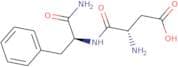
CAS 5241-71-4
:L-Phenylalaninamide, L-a-aspartyl-
Description:
L-Phenylalaninamide, L-a-aspartyl- (CAS 5241-71-4) is a dipeptide derivative formed from the amino acids phenylalanine and aspartic acid. This compound is characterized by its amide functional group, which contributes to its stability and solubility in various solvents. It typically appears as a white to off-white crystalline powder and is soluble in water, making it suitable for various biochemical applications. The presence of the phenylalanine moiety imparts aromatic characteristics, while the aspartic acid component adds a polar, charged aspect to the molecule. This compound is often studied for its potential roles in biochemical pathways and its applications in pharmaceuticals, particularly in the context of peptide synthesis and drug formulation. Additionally, it may exhibit specific biological activities, which can be of interest in research related to neurochemistry and metabolic processes. As with many amino acid derivatives, it is important to handle this compound with care, following appropriate safety protocols in laboratory settings.
Formula:C13H17N3O4
Synonyms:- Succinamicacid, 3-amino-N-(a-carbamoylphenethyl)-
- Alaninamide, L-a-aspartylphenyl-, L-
- Aspartylphenylalanine amide
- Cholecystokinin32-33
- L-Aspartyl-L-phenylalaninamide
- H-Asp-Phe-NH2
Sort by
Purity (%)
0
100
|
0
|
50
|
90
|
95
|
100
Found 2 products.
H-Asp-Phe-NH2
CAS:H-Asp-Phe-NH2 is a carboxy terminal amide of angiotensin, which is a peptide hormone. It is an analog of angiotensin II, which has been shown to have a number of therapeutic effects in the treatment of infectious diseases and cancer. H-Asp-Phe-NH2 has been shown to activate the angiotensin system by binding to serine protease, thereby regulating blood pressure and body fluid levels. This drug also has anti-inflammatory properties that may be due to its ability to inhibit prostaglandin synthesis. The optimal pH for this chemical reaction is 7.5. Structural studies on this compound have revealed that it can form hydrogen bonds with amino acids in proteins and tissues such as cysteine, histidine, and lysine.Formula:C13H17N3O4Purity:Min. 95%Molecular weight:279.29 g/molH-Asp-Phe-NH2 trifluoroacetate
CAS:Please enquire for more information about H-Asp-Phe-NH2 trifluoroacetate including the price, delivery time and more detailed product information at the technical inquiry form on this page
Formula:C13H17N3O4•(C2HF3O2)xPurity:Min. 95%Ref: 3D-FH184031
Discontinued product