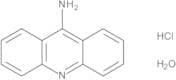
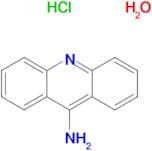
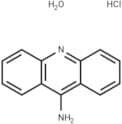
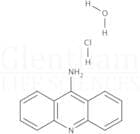
CAS 52417-22-8
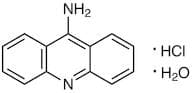
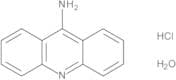
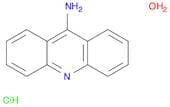
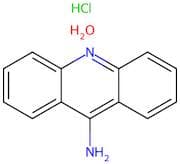
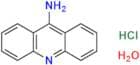
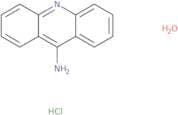
:9-Acridinamine, hydrochloride, hydrate (1:1:1)
Description:
9-Acridinamine, hydrochloride, hydrate (1:1:1) is a chemical compound characterized by its acridine core, which is a polycyclic aromatic amine. This substance typically appears as a crystalline solid and is soluble in water due to the presence of the hydrochloride salt form, which enhances its solubility compared to the free base. The compound is known for its potential biological activity, particularly in the fields of medicinal chemistry and pharmacology, where it may exhibit antitumor and antimicrobial properties. The hydrate form indicates that it contains water molecules in its crystal structure, which can influence its stability and solubility. As with many acridine derivatives, it may also participate in intercalation with nucleic acids, making it of interest in DNA research. Safety data should be consulted, as acridine derivatives can be toxic and may pose health risks upon exposure. Proper handling and storage conditions are essential to ensure safety and maintain the integrity of the compound.
Formula:C13H13ClN2O
InChI:InChI=1/C13H10N2/c14-13-9-5-1-3-7-11(9)15-12-8-4-2-6-10(12)13/h1-8H,(H2,14,15)/p+1
InChI key:InChIKey=OREJEGKBQBIJSJ-UHFFFAOYSA-N
SMILES:NC=1C2=C(N=C3C1C=CC=C3)C=CC=C2.Cl.O
Synonyms:- 9-Acridamine, monohydrochloride, monohydrate
- 9-Acridinamine, hydrochloride, hydrate (1:1:1)
- 9-Acridinamine, monohydrochloride, monohydrate
- 9-Aminoacridine HCl monohydrate
- 9-Aminoacridine Hydrochloride Hydrate
- Acridin-9-Aminium
- Aminacrine hydrochloride monohydrate
- 9-Aminoacridine hydrochloride monohydrate
- 9-AMINOACRIDINE HYDROCHLORIDE 1-HYDRATE
- 9-AMINOACRIDINE HYDROCHLORIDE
- 9-AMINOACRIDINE HYDROCHLORIDE MONOHYDRATE 97+%
- 9-AMINOACRIDINE HYDROCHLORIDE HYDRATE, 9 8%
- 9-Aminoacridine hydrochloride monohydrate, 99+%
- 9-Aminoaceridine hydrochloride monohydrate
- 9-AminoacridineHClmonohydrate
- TIMTEC-BB SBB003163
- 9-Aminoacridine hydrate hydrochloride
- 9-Aminoacridine monohydrate hydrochloride
- 9-AMINOACRIDINE HYDROCHLORIDE MONOHYDRATE PURUM, FOR FLUORESCENCE 96%
- See more synonyms
Sort by
Purity (%)
0
100
|
0
|
50
|
90
|
95
|
100
Found 10 products.
9-Aminoacridine Hydrochloride Monohydrate
CAS:Formula:C13H10N2·HCl·H2OPurity:>98.0%(T)Color and Shape:Light yellow to Yellow to Orange powder to crystalMolecular weight:248.72Aminoacridine Hydrochloride Monohydrate (9-Aminoacridine Hydrochloride Monohydrate)
CAS:Color and Shape:NeatAcridin-9-amine hydrochloride hydrate
CAS:Formula:C13H13ClN2OPurity:98%Color and Shape:SolidMolecular weight:248.7081Acridin-9-Amine Hydrochloride Hydrate
CAS:Acridin-9-Amine Hydrochloride HydratePurity:98%Molecular weight:248.71g/molAminoacridine Hydrochloride Monohydrate (9-Aminoacridine Hydrochloride Monohydrate)
CAS:Formula:C13H10N2·ClH·H2OColor and Shape:NeatMolecular weight:248.719-Aminoacridine hydrochloride hydrate
CAS:Purity:98.0%Color and Shape:Solid, Pale yellow to yellow powderMolecular weight:248.7100067138672Aminacrine hydrochloride monohydrate
CAS:Aminacrine HCl monohydrate: fluorescent, DNA-binding antiseptic, mutagen, and intracellular pH indicator.Formula:C13H13ClN2OPurity:98%Color and Shape:Yellow PowderMolecular weight:248.719-Aminoacridine hydrochloride monohydrate
CAS:Formula:C13H10N2·HCl·H2OPurity:≥ 98.0%Color and Shape:Pale yellow to yellow-green crystalline powderMolecular weight:230.69 (anhydrous)9-Aminoacridine Hydrochloride Monohydrate
CAS:Formula:C13H10N2HClH2OMolecular weight:194.2 : 36.46 : 18.09-Acridinamine hydrochloride hydrate
CAS:9-Acridinamine hydrochloride hydrate is a redox agent that has been shown to have genotoxic effects in vitro. It can be used for the treatment of infectious diseases such as tuberculosis and leprosy, but it is not active against gram-positive bacteria. 9-Acridinamine hydrochloride hydrate has been shown to inhibit the growth of bacteria by binding to DNA and preventing transcription, replication, and repair. This compound also inhibits bacterial protein synthesis by forming covalent bonds with amino groups on proteins. 9-Acridinamine hydrochloride hydrate has been shown to be safe when administered orally in animal studies, but it may cause hepatotoxicity.Formula:C13H10N2·HCl·H2OPurity:Min. 95%Color and Shape:Yellow PowderMolecular weight:248.71 g/molRef: 3D-FA10632
Discontinued product