CAS 52480-43-0
:4,5-Dimethyl-2-furaldehyde
Description:
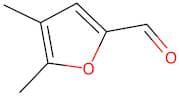
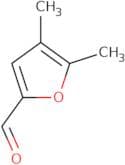
4,5-Dimethyl-2-furaldehyde, with the CAS number 52480-43-0, is an organic compound belonging to the furan family. It is characterized by a furan ring substituted with two methyl groups at the 4 and 5 positions and an aldehyde functional group at the 2 position. This compound typically appears as a colorless to pale yellow liquid with a sweet, caramel-like odor, making it of interest in flavor and fragrance applications. It is soluble in organic solvents and exhibits moderate solubility in water. The compound is known for its potential use in the synthesis of various pharmaceuticals and agrochemicals, as well as in the production of polymers and resins. Its reactivity is influenced by the presence of the aldehyde group, which can participate in various chemical reactions, including condensation and oxidation. Safety data indicates that it should be handled with care, as it may cause irritation to the skin and eyes. Overall, 4,5-Dimethyl-2-furaldehyde is a versatile compound with significant industrial and research applications.
Formula:C7H8O2
InChI:InChI=1/C7H8O2/c1-5-3-7(4-8)9-6(5)2/h3-4H,1-2H3
SMILES:Cc1cc(C=O)oc1C
Synonyms:- 2-Furancarboxaldehyde, 4,5-dimethyl-
- 4,5-Dimethylfuran-2-Carbaldehyde
- 4,5-Dimethyl-2-furaldehyde
Sort by
Purity (%)
0
100
|
0
|
50
|
90
|
95
|
100
Found 4 products.
4,5-Dimethylfuran-2-carbaldehyde
CAS:Formula:C7H8O2Purity:97%Color and Shape:LiquidMolecular weight:124.13724,5-Dimethyl-2-furaldehyde
CAS:4,5-Dimethyl-2-furaldehydeFormula:C7H8O2Purity:95%Color and Shape: clear. yellow liquidMolecular weight:124.14g/mol4,5-Dimethyl-2-furancarboxaldehyde
CAS:4,5-Dimethyl-2-furancarboxaldehyde is a phenyl compound that is found in the synthesis of 5-hydroxymethylfurfural. It has been shown to be an influential chemical that can promote carcinogenic activity and inhibit ptp1b. 4,5-Dimethyl-2-furancarboxaldehyde may also influence the formation of adducts with DNA and proteins. This chemical has been shown to have carcinogenic potential through its ability to react with nitrite in the stomach to form nitrosamines, which are known carcinogens.Formula:C10H8N2O2Purity:Min. 95%Color and Shape:PowderMolecular weight:124.14 g/mol4,5-Dimethyl-2-furaldehyde
CAS:Formula:C7H8O2Purity:95.0%Color and Shape:LiquidMolecular weight:124.139