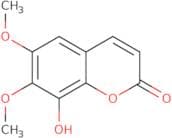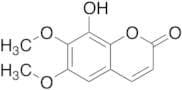
CAS 525-21-3
:Fraxidin
Description:
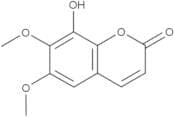
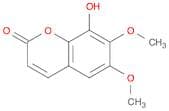
Fraxidin, with the CAS number 525-21-3, is a chemical compound that belongs to the class of alkaloids. It is primarily derived from various plant sources, particularly those in the genus *Fraxinum*. This compound is characterized by its unique molecular structure, which contributes to its biological activity. Fraxidin exhibits a range of pharmacological properties, including potential anti-inflammatory and analgesic effects, making it of interest in medicinal chemistry. Its solubility characteristics can vary, often being more soluble in organic solvents than in water. The compound's stability and reactivity are influenced by environmental factors such as pH and temperature. Additionally, Fraxidin's interactions with biological systems can lead to various metabolic pathways, which are crucial for understanding its therapeutic potential and safety profile. As with many alkaloids, further research is necessary to fully elucidate its mechanisms of action and potential applications in medicine.
Formula:C11H10O5
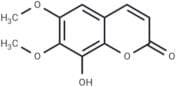
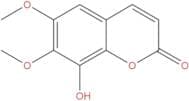
InChI:InChI=1S/C11H10O5/c1-14-7-5-6-3-4-8(12)16-10(6)9(13)11(7)15-2/h3-5,13H,1-2H3
InChI key:InChIKey=QNFBKOHHLAWWTC-UHFFFAOYSA-N
SMILES:OC1=C2C(=CC(OC)=C1OC)C=CC(=O)O2
Synonyms:- 2H-1-Benzopyran-2-one, 8-hydroxy-6,7-dimethoxy-
- 8-Hydroxy-6,7-dimethoxy-2H-1-benzopyran-2-one
- 8-hydroxy-6,7-dimethoxy-2H-chromen-2-one
- Coumarin, 8-hydroxy-6,7-dimethoxy-
- Fraxidin
- 8-Hydroxy-6,7-dimethoxy-2-benzopyrone
Sort by
Purity (%)
0
100
|
0
|
50
|
90
|
95
|
100
Found 6 products.
Fraxidin
CAS:Fraxidin analytical standard provided with chromatographic purity, to be used as reference material for qualitative determination.Formula:C11H10O5Purity:(HPLC) ≥95%Color and Shape:PowderMolecular weight:222.2Fraxidin
CAS:Fraxidin, a coumarin, from Jatropha podagrica roots, inhibits Bacillus subtilis (12 mm zone) at 20 μg/disk.Formula:C11H10O5Purity:98%Color and Shape:SolidMolecular weight:222.196Fraxidin
CAS:Fraxidin is a naturally occurring compound, specifically an O-methylated coumarin, which is derived from certain plant sources such as the fruits of the ash tree. It is primarily obtained through the processing of various plant materials within the Rutaceae family. The mode of action of Fraxidin involves the inhibition of oxidative damage due to its capacity to scavenge free radicals, thus leading to potential antioxidant properties in biological systems.Formula:C11H10O5Purity:Min. 98 Area-%Color and Shape:PowderMolecular weight:222.19 g/mol