CAS 52562-19-3
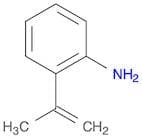
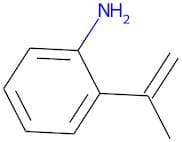
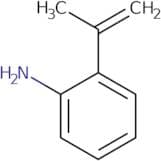
:2-Isopropenylaniline
Description:
2-Isopropenylaniline, with the CAS number 52562-19-3, is an organic compound characterized by the presence of both an isopropenyl group and an aniline moiety. This compound typically appears as a colorless to pale yellow liquid and has a distinctive aromatic odor. It is known for its reactivity due to the presence of the isopropenyl group, which can participate in various chemical reactions, including polymerization and electrophilic substitution. The aniline part of the molecule contributes to its basicity and potential for forming hydrogen bonds, making it a useful intermediate in organic synthesis. Additionally, 2-Isopropenylaniline may exhibit properties such as solubility in organic solvents and limited solubility in water, which is common for many aniline derivatives. Safety considerations should be taken into account, as it may be harmful if inhaled or absorbed through the skin, and appropriate handling procedures should be followed in laboratory settings. Overall, 2-Isopropenylaniline serves as a valuable compound in the synthesis of dyes, pharmaceuticals, and other chemical products.
Formula:C9H11N
InChI:InChI=1S/C9H11N/c1-7(2)8-5-3-4-6-9(8)10/h3-6H,1,10H2,2H3
InChI key:InChIKey=HEDYZFYQYPWWCC-UHFFFAOYSA-N
SMILES:C(C)(=C)C1=C(N)C=CC=C1
Synonyms:- 2-(1-Methylethenyl)aniline
- 2-(1-Methylethenyl)benzenamine
- 2-(Prop-1-En-2-Yl)Aniline
- 2-(Prop-1-en-2-yl)benzenamine
- Benzenamine, 2-(1-methylethenyl)-
- Nsc 76548
- o-Isopropenylaniline
- 2-Isopropenylaniline
Sort by
Purity (%)
0
100
|
0
|
50
|
90
|
95
|
100
Found 4 products.
2-Isopropenylaniline
CAS:2-Isopropenylaniline is a chemical intermediate that belongs to the class of quinoline derivatives. It is synthesized by the reaction of an alkene with an amine in the presence of sodium carbonate. 2-Isopropenylaniline can be used to prepare cinnolines and gold nanoparticles. This compound has been shown to react with nitrobenzene or benzidine at elevated temperatures, forming imines, which are intermediates in the synthesis of many other organic compounds. The addition of ammonia or ammonium chloride leads to formation of quinoline derivatives.
Formula:C9H11NPurity:Min. 95%Color and Shape:Clear LiquidMolecular weight:133.19 g/mol