CAS 526-37-4
:2,6-dihydroxy-4-methylbenzaldehyde
Description:
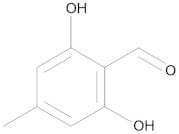
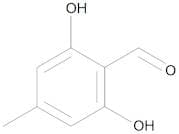
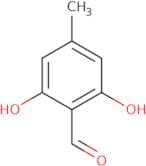
2,6-Dihydroxy-4-methylbenzaldehyde, with the CAS number 526-37-4, is an organic compound that belongs to the class of aromatic aldehydes. It features a benzene ring substituted with two hydroxyl groups at the 2 and 6 positions and a methyl group at the 4 position, along with an aldehyde functional group. This compound is typically a white to light yellow crystalline solid, exhibiting solubility in polar solvents such as water, ethanol, and methanol due to the presence of hydroxyl groups. It has notable applications in organic synthesis and as an intermediate in the production of dyes and pharmaceuticals. The presence of multiple functional groups contributes to its reactivity, allowing it to participate in various chemical reactions, including oxidation and condensation. Additionally, its hydroxyl groups can engage in hydrogen bonding, influencing its physical properties and interactions with other molecules. Overall, 2,6-dihydroxy-4-methylbenzaldehyde is a versatile compound with significant relevance in both industrial and research settings.
Formula:C8H8O3
InChI:InChI=1/C8H8O3/c1-5-2-7(10)6(4-9)8(11)3-5/h2-4,10-11H,1H3
SMILES:Cc1cc(c(C=O)c(c1)O)O
Synonyms:- Benzaldehyde, 2,6-Dihydroxy-4-Methyl-
Sort by
Purity (%)
0
100
|
0
|
50
|
90
|
95
|
100
Found 5 products.
2,6-DIHYDROXY-4-METHYLBENZALDEHYDE
CAS:Formula:C8H8O3Purity:95%Color and Shape:SolidMolecular weight:152.14732,6-Dihydroxy-4-methylbenzaldehyde
CAS:Controlled ProductFormula:C8H8O3Color and Shape:NeatMolecular weight:152.1473Atranol
CAS:Atranol is a phenolic compound that is found in plants such as the leaves of the white willow tree. It has been shown to have anti-inflammatory properties and is being researched for its potential use in treatment of inflammatory bowel disease. Atranol has been shown to inhibit the production of inflammatory cytokines such as tumor necrosis factor-α (TNF-α) and interleukin-1β (IL-1β), which are key mediators of inflammation, by inhibiting NFκB activation. The reaction mechanism for atranol's inhibition of IL-1β production involves atranol binding with the cystein residue on IκB kinase β, which prevents phosphorylation and thus activation.
Formula:C8H8O3Purity:Min. 95%Color and Shape:Brown Yellow PowderMolecular weight:152.15 g/mol