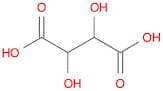
CAS 526-83-0
:2,3-Dihydroxybutanedioic acid
Description:
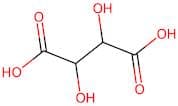
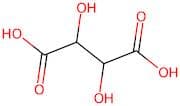
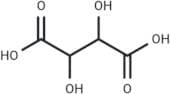
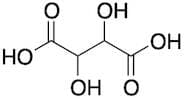
2,3-Dihydroxybutanedioic acid, commonly known as tartaric acid, is a naturally occurring organic acid with the molecular formula C4H6O6. It is a white crystalline substance that is soluble in water and exhibits a slightly acidic taste. Tartaric acid is characterized by the presence of two hydroxyl (-OH) groups and two carboxylic acid (-COOH) groups, which contribute to its reactivity and ability to form salts and esters. It is optically active, existing in multiple stereoisomeric forms, with the most common being the L-tartaric acid, which is widely found in grapes and used in winemaking. Tartaric acid plays a significant role in the food industry as a stabilizing agent for cream of tartar in baking and as an acidulant in various food products. Additionally, it has applications in the pharmaceutical and cosmetic industries. Its ability to form complexes with metal ions makes it useful in analytical chemistry as well. Overall, 2,3-dihydroxybutanedioic acid is a versatile compound with various industrial and culinary applications.
Formula:C4H6O6
InChI:InChI=1S/C4H6O6/c5-1(3(7)8)2(6)4(9)10/h1-2,5-6H,(H,7,8)(H,9,10)
InChI key:InChIKey=FEWJPZIEWOKRBE-UHFFFAOYSA-N
SMILES:C(C(C(O)=O)O)(C(O)=O)O
Synonyms:- 2,3-Dihydroxy-succinic acid
- 2,3-Dihydroxybutanedioic acid
- Acide tartarique
- Butanedioic acid, 2,3-dihydroxy-
- Tartaric Acid
Sort by
Purity (%)
0
100
|
0
|
50
|
90
|
95
|
100
Found 7 products.
2,3-Dihydroxybutanedioic acid
CAS:2,3-Dihydroxybutanedioic acidPurity:97%Molecular weight:150.09g/molD(-)-Tartaric acid
CAS:D(-)-Tartaric acid, in plants like tamarinds/grapes, induces CO2 for stomach expansion in double contrast radiography.Formula:C4H6O6Purity:99.91% - 99.98%Color and Shape:White Crystalline Diprotic Organic AcidMolecular weight:150.09dl-tartaric acid
CAS:Controlled ProductApplications (cas# 526-83-0) is a useful research chemical.
Formula:C4H6O6Color and Shape:NeatMolecular weight:150.087D(-)-Tartaric acid
CAS:2,3-Dihydroxybutanedioic acid is a metabolite of pantothenic acid and is produced by the action of β-alanine dioxygenase on 2,3-dihydroxybutyric acid. It has been suggested that 2,3-dihydroxybutanedioic acid may be an important link in the biochemical pathway for calcium uptake and metabolism. This compound is structurally similar to tartrate, which is also used as a pH buffer and may be involved in the regulation of energy metabolism. There are no known inhibitors or activators of 2,3-dihydroxybutanedioic acid.Formula:C4H6O6Purity:Min. 95%Molecular weight:150.09 g/mol