CAS 526-91-0
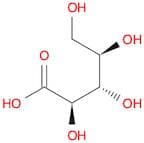
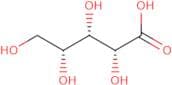
:D-Xylonic acid
Description:
D-Xylonic acid is a naturally occurring sugar acid derived from xylose, a five-carbon aldose sugar. It is characterized by its molecular formula, which includes a carboxylic acid functional group, making it an important compound in carbohydrate chemistry. D-Xylonic acid typically appears as a white crystalline solid and is soluble in water due to its polar nature. It has a sweet taste, which is common among many sugar acids. The compound plays a role in various biochemical processes and can be utilized in the synthesis of other organic compounds. Its structure features multiple hydroxyl groups, contributing to its reactivity and ability to form esters and other derivatives. D-Xylonic acid is also of interest in the food industry and biochemistry for its potential applications in flavoring and as a precursor for various biochemical pathways. Additionally, it can be involved in research related to metabolic pathways and the development of sugar-based materials.
Formula:C5H10O6
InChI:InChI=1S/C5H10O6/c6-1-2(7)3(8)4(9)5(10)11/h2-4,6-9H,1H2,(H,10,11)/t2-,3+,4-/m1/s1
InChI key:InChIKey=QXKAIJAYHKCRRA-FLRLBIABSA-N
SMILES:[C@@H]([C@H](C(O)=O)O)([C@@H](CO)O)O
Synonyms:- Xylonic acid, D-
- D-Xylonic acid
Sort by
Purity (%)
0
100
|
0
|
50
|
90
|
95
|
100
Found 3 products.
D-Xylonic acid lithium salt
CAS:Formula:C5H10O6Purity:95%Color and Shape:SolidMolecular weight:166.1293D-Xylonic acid lithium
CAS:D-Xylonic acid lithium salt is a redox potential regulator that belongs to the class of nucleotide phosphate. It has been shown to inhibit the transcriptional regulation of genes in Saccharomyces cerevisiae strain. D-Xylonic acid lithium salt inhibits the growth of bacteria by binding to a hydroxyl group on the surface of bacterial cells, which disrupts the cell membrane and causes cell death. This drug also has film-forming properties and can be used as a model system for studying glycolaldehyde, an intermediate in sugar metabolism.
Formula:C5H10O6•LiPurity:Min. 95%Molecular weight:173.07 g/mol