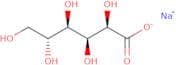
CAS 527-07-1
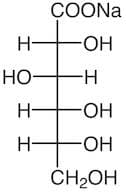
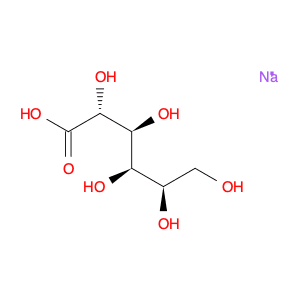
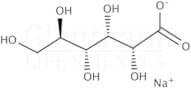
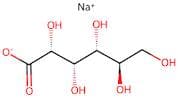
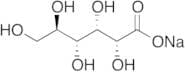
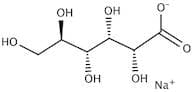
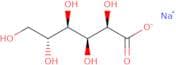
:Sodium gluconate
- <span class="text-smallcaps">D</span>-Gluconic acid, monosodium salt
- <span class="text-smallcaps">D</span>-Gluconic acid, sodium salt (1:1)
- BVD Addicrete
- Clewat GL
- D-Gluconic acid, monosodium salt
- D-Gluconic acid, sodium salt (1:1)
- D-Glulonic acid, monosodium salt
- Disparlight DV
- Emf 1240
- GL-P (gluconate)
- Glonsen
- Glucon SGA 60
- Gluconate Sodium
- Gluconate de sodium
- Gluconato De Sodio
- Gluconic Acid Sodium
- Gluconic acid monosodium salt
- Gluconic acid, monosodium salt, <span class="text-smallcaps">D</span>-
- Gluconic acid, monosodium salt, D-
- Helshas A
- Monosodium gluconate
- Natriumgluconat
- PMP Sodium Gluconate
- Pasexon 100T
- Resitard P 608A
- Sodium 2,3,4,5,6-Pentahydroxyhexanoate (Non-Preferred Name)
- Sodium 2,3,4,5,6-pentahydroxy-1-hexanoate
- Sodium <span class="text-smallcaps">D</span>-gluconate
- Sodium D-gluconate
- Sodium Gluconate Re
- Sodium gluconate
- Sunmorl N 60S
- See more synonyms
Sodium Gluconate
CAS:Formula:C6H11NaO7Purity:>99.0%(T)Color and Shape:White to Light yellow powder to crystalMolecular weight:218.14Sodium D-gluconate, 97%
CAS:Sodium D-gluconate is a good chelator at alkaline pH, with chelating power relatively better than EDTA, NTA and other chelators. It has wide range of industrial applications which include textile dyeing, water treatments, printing and as cleaning agent for glass bottles. It also finds use as derus
Formula:C6H11NaO7Purity:97%Color and Shape:White, Powder or crystals or crystalline powderMolecular weight:218.14Gluconate sodium
CAS:Gluconate sodium (Sodium D-gluconate) is the sodium salt of gluconic acid with a chelating property.Formula:C6H11NaO7Purity:99.50%Color and Shape:White Or Off-White Granular PowderMolecular weight:218.14Sodium gluconate
CAS:Formula:C6H11NaO7Purity:≥ 99.0%Color and Shape:White crystalline powderMolecular weight:218.14Sodium gluconate, USP grade
CAS:Formula:C6H11NaO7Purity:98.0 - 102.0 %Color and Shape:White or almost white crystalline powderMolecular weight:218.13Sodium D-Gluconate
CAS:Applications Sodium D-Gluconate has use as an additive in processed foods, with the potential to improve taste. It has also been shown through study to alter gene expression in the colon of colorectal cancer model subjects. This is the labeled isomer.
References Narukawa, M. et al.: Biosci. Biotech. Biochem., 76, 2282 (2012); Kameue, C. et al.: Biosci. Biotech. Biochem., 70, 606 (2006);Formula:C6H11NaO7Color and Shape:White Crystalline PowderMolecular weight:218.14Sodium Gluconate pure, 99%
CAS:Formula:C6H11NaO7Purity:min. 99%Color and Shape:White, Crystalline powder, Clear, ColourlessMolecular weight:218.14D-Gluconic acid sodium salt
CAS:Formula:C6H11NaO7Purity:98%Color and Shape:SolidMolecular weight:218.137Sodium D-Gluconate-1-13C
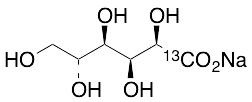
CAS:Controlled ProductApplications Sodium D-Gluconate has use as an additive in processed foods, with the potential to improve taste. It has also been shown through study to alter gene expression in the colon of colorectal cancer model subjects. This is the labeled isomer.
References Narukawa, M. et al.: Biosci. Biotech. Biochem., 76, 2282 (2012); Kameue, C. et al.: Biosci. Biotech. Biochem., 70, 606 (2006);Formula:CC5H11NaO7Color and Shape:Off-WhiteMolecular weight:219.13D-Gluconic acid sodium salt
CAS:D-Gluconic acid sodium salt - USP grade is a biochemical reagent that is used in the synthesis of nucleotides and various other biomolecules. It is also used as an antimicrobial agent, with broad-spectrum activity against bacteria, fungi, and viruses. In addition to its antimicrobial activity, D-gluconic acid has been shown to inhibit carcinoma cell lines in vitro. This inhibition may be due to the inhibition of enzymes involved in phosphorylation reactions such as adenylate kinase, glyceraldehyde 3-phosphate dehydrogenase (GAPDH) and hexokinase. X-ray diffraction data on wild-type strains of E. coli have shown that D-gluconic acid binds to the enzyme phosphogluconate dehydrogenase (PGD), which catalyzes a reaction between D-gluconic acid and NAD+ or NADP+. The matrix effect for this reaction wasFormula:C6H11NaO7Purity:Min. 95%Molecular weight:218.14 g/molD-Gluconic acid sodium salt
CAS:D-Gluconic acid sodium salt is a glycol ether that is used as an injection solution. It has been shown to have antibacterial efficacy against wild-type strains of bacteria such as Escherichia coli, Pseudomonas aeruginosa, and Staphylococcus aureus. The in vitro antimicrobial action of D-gluconic acid sodium salt was found to be due to its ability to inhibit bacterial growth by interfering with the synthesis of DNA. D-Gluconic acid sodium salt also has been shown to have antihypertensive effects in rats through the inhibition of angiotensin II type 1 receptor (AT1) signaling pathway and erythrocyte proliferation. This drug also has been shown to bind benzalkonium chloride and x-ray diffraction data show that it is crystalline in nature. The analytical method for determining the concentration of D-gluconic acid sodium salt is by electrochemical impedance
Formula:C6H11NaO7Purity:Min. 95%Color and Shape:White PowderMolecular weight:218.14 g/mol