CAS 528818-81-7
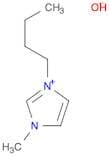
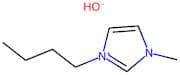
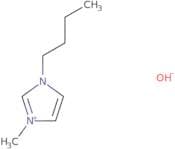
:1-Butyl-3-methylimidazolium hydroxide
Description:
1-Butyl-3-methylimidazolium hydroxide is an ionic liquid characterized by its unique structure, which includes a butyl group and a methyl group attached to the imidazolium ring. This compound is known for its high thermal stability and low volatility, making it suitable for various applications in green chemistry and as a solvent in chemical reactions. Its hydroxide anion contributes to its basicity, allowing it to act as a strong base in organic synthesis. Additionally, 1-butyl-3-methylimidazolium hydroxide exhibits good solubility in water and polar organic solvents, enhancing its utility in various chemical processes. The presence of the imidazolium cation imparts interesting electrochemical properties, which can be exploited in electrochemical applications. Furthermore, this ionic liquid is often studied for its potential in catalysis, extraction processes, and as a medium for biomass conversion, reflecting its versatility in both industrial and research settings. Overall, its combination of properties makes it a valuable substance in the field of chemistry.
Sort by
Purity (%)
0
100
|
0
|
50
|
90
|
95
|
100
Found 4 products.
1-Butyl-3-methylimidazolium hydroxide
CAS:Formula:C8H16N2OPurity:%Color and Shape:LiquidMolecular weight:156.22543-Butyl-1-methyl-1H-imidazol-3-ium hydroxide
CAS:3-Butyl-1-methyl-1H-imidazol-3-ium hydroxidePurity:20 wt. % in ethanolMolecular weight:156.23g/mol1-Butyl-3-methylimidazolium hydroxide - 25% in ethanol
CAS:1-Butyl-3-methylimidazolium hydroxide is a phase transition material that belongs to the ionic liquid family. It is an ionic liquid with a low vapor pressure and high thermal stability. 1-Butyl-3-methylimidazolium hydroxide has been shown to exhibit antimicrobial activity against Gram positive and Gram negative bacteria, including methicillin resistant Staphylococcus aureus (MRSA), as well as some fungi, without any toxic effects on mammalian cells in vitro. 1-Butyl-3-methylimidazolium hydroxide exhibits these properties due to its ability to disrupt the bacterial cell membrane by binding to fatty acids on the external surface of the membrane. The mechanism of action for this compound is not known, but it may be related to redox potentials or chemical interactions between the compound and other cellular components.Formula:C8H16N2OPurity:Min. 90%Color and Shape:Clear LiquidMolecular weight:156.23 g/mol1-Butyl-3-methylimidazolium hydroxide, 20% in ethanol solution
CAS:Purity:70%Color and Shape:LiquidMolecular weight:156.229