![N'-(3-bromobenzylidene)-4-oxo-3,4,5,6,7,8-hexahydro[1]benzothieno[2,3-d]pyrimidine-2-carbohydrazide](/_next/image/?url=https%3A%2Fstatic.cymitquimica.com%2Fcas-image%2Fthumb-webp%2F298587-n-3-bromobenzylidene-4-oxo-345678-hexahydro-1-benzothieno-23-d-pyrimidine-2-carbohydrazide.webp&w=3840&q=75)
CAS 5309-35-3
:N'-(3-bromobenzylidene)-4-oxo-3,4,5,6,7,8-hexahydro[1]benzothieno[2,3-d]pyrimidine-2-carbohydrazide
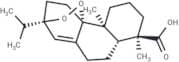
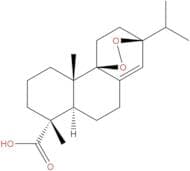
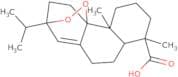
9,13-Epidioxy-8(14)-abieten-18-oic acid
CAS:9,13β-Epidioxy-8(14)-abieten-18-oic acid has anti-inflammatory activities, it exhibits moderate activities on NO levels in LPS-stimulated murine microglia BV2Formula:C20H30O4Purity:98%Color and Shape:SolidMolecular weight:334.459β,13β-Epidioxyabiet-8(14)-en-18-oic acid
CAS:Formula:C20H30O4Purity:95%~99%Color and Shape:PowderMolecular weight:334.4569,13-Epidioxy-8(14)-abieten-18-oic acid
CAS:9,13-Epidioxy-8(14)-abieten-18-oic acid is a naturally occurring diterpene compound, which is derived from the resin of certain pine species. Its unique structure includes an epidioxy bridge, which is a key feature contributing to its biological activity. The compound acts primarily through its ability to generate reactive oxygen species, leading to oxidative stress that can target microbial cells and tumor cells alike. This mechanism makes it a promising candidate for antimicrobial and antitumor applications. It has been studied for its potential to inhibit the growth of various pathogenic microorganisms and its ability to induce apoptosis in cancerous cells. The compound is often explored within the context of drug discovery and development, particularly for its role in novel therapeutic strategies aimed at resistant strains of bacteria and challenging cancer types. Researchers continue to investigate its pharmacokinetic properties and potential synergistic effects with other bioactive compounds.
Formula:C20H30O4Purity:Min. 95%Molecular weight:334.4 g/mol