CAS 5327-44-6
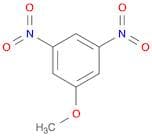
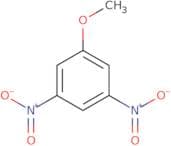
:1-Methoxy-3,5-dinitrobenzene
Description:
1-Methoxy-3,5-dinitrobenzene, with the CAS number 5327-44-6, is an organic compound characterized by the presence of a methoxy group (-OCH3) and two nitro groups (-NO2) attached to a benzene ring. This compound typically appears as a yellow crystalline solid and is known for its aromatic properties. The methoxy group contributes to its solubility in organic solvents, while the nitro groups enhance its reactivity, making it a potential candidate for various chemical reactions, including nitration and reduction processes. 1-Methoxy-3,5-dinitrobenzene is often used in research and industrial applications, particularly in the synthesis of dyes, pharmaceuticals, and other organic compounds. It is important to handle this substance with care, as nitro compounds can be hazardous due to their potential explosive nature and toxicity. Proper safety measures, including the use of personal protective equipment and adequate ventilation, are essential when working with this chemical.
Formula:C7H6N2O5
InChI:InChI=1/C7H6N2O5/c1-14-7-3-5(8(10)11)2-6(4-7)9(12)13/h2-4H,1H3
InChI key:InChIKey=OTMLGCBMOMNGCV-UHFFFAOYSA-N
SMILES:N(=O)(=O)C1=CC(N(=O)=O)=CC(OC)=C1
Synonyms:- 1-Methoxy-3,5-Dinitrobenzene
- Ai3-19029
- Anisole, 3,5-dinitro-
- Benzene, 1-methoxy-3,5-dinitro-
- Nsc 3331
- 3,5-Dinitroanisole
- 3,5-Dinitroanisole
- 1-methoxy-3,5-dinitro-benzen
- 1,3-Dinitro-5-methoxybenzene
- 3,5-dinitro-anisol
- 3,5-Dinitrophenylmethylether
Sort by
Purity (%)
0
100
|
0
|
50
|
90
|
95
|
100
Found 3 products.
3,5-Dinitroanisole
CAS:3,5-Dinitroanisole is a molecule that has been shown to inhibit cancer cell growth in vitro and in vivo. It is a nitro compound that undergoes reduction with hydrogen peroxide and an electron donor to form 3,5-dinitrobenzoic acid. This substance has been shown to have anticancer activity against human cancer cells by inhibiting the production of nucleic acids. 3,5-Dinitroanisole also inhibits protein synthesis by binding to ribosomes and blocking the formation of proteins. 3,5-Dinitroanisole is also able to bind to DNA and cause strand breaks at sites that are sensitive to alkylations. The mechanism of this process is thought to be due to the ability of 3,5-dinitroanisole molecules to react with hydroxyl groups on DNA bases and release nitric oxide radicals.Formula:C7H6N2O5Purity:Min. 95%Color and Shape:SolidMolecular weight:198.13 g/mol