CAS 533-18-6
:2-Methylphenyl acetate
Description:
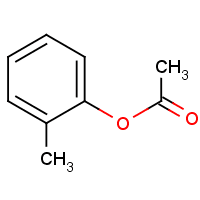
2-Methylphenyl acetate, also known as o-tolyl acetate, is an organic compound characterized by its ester functional group, derived from the reaction of 2-methylphenol (o-cresol) and acetic acid. It has a molecular formula of C9H10O2 and features a distinctive aromatic ring structure, which contributes to its chemical properties. This compound is typically a colorless to pale yellow liquid with a sweet, fruity odor, making it useful in the fragrance and flavoring industries. It is moderately soluble in water but more soluble in organic solvents such as ethanol and ether. 2-Methylphenyl acetate exhibits low toxicity, but like many esters, it can be an irritant to the skin and eyes. Its boiling point and density are typical for esters, and it can undergo hydrolysis in the presence of water, reverting to its parent alcohol and acetic acid. This compound is utilized in various applications, including as a solvent and in the synthesis of other chemical compounds.
Formula:C9H10O2
InChI:InChI=1/C9H10O2/c1-7-5-3-4-6-9(7)11-8(2)10/h3-6H,1-2H3
InChI key:InChIKey=AMZORBZSQRUXNC-UHFFFAOYSA-N
SMILES:O(C(C)=O)C1=C(C)C=CC=C1
Synonyms:- 2-Acetoxytoluene
- 2-Methylphenyl acetate
- Acetic acid 2-methylphenyl ester
- Acetic acid o-tolyl ester
- Acetyl-o-cresol
- NSC 58961
- NSC 6257
- o-Acetoxytoluene
- o-Cresol acetate
- o-Cresyl acetate
- o-Cresylic acetate
- o-Methylphenyl acetate
- FEMA 3072
- O-TOLYL ACETATE
- -Tolyl Acetate
- Acetic acid 2-methylphenyl
- 2-Methylphenyl ester of acetic acid
- 2-METHYL PHENYL ACETATE
- Acetic Acid o-Cresyl Ester
- (2-methylphenyl) ethanoate
- o
- aceticacid,2-methylphenylester
- ORTHO-TOLYLACETATE
- ACETIC ACID O-CRESYL ESTER
- See more synonyms
Sort by
Purity (%)
0
100
|
0
|
50
|
90
|
95
|
100
Found 5 products.
o-Tolyl Acetate
CAS:Formula:C9H10O2Purity:>98.0%(GC)Color and Shape:Colorless to Almost colorless clear liquidMolecular weight:150.18o-Tolyl Acetate
CAS:o-Tolyl Acetate is an organic compound that belongs to the class of aliphatic hydrocarbons. It has a reactive hydrogen atom (H) and a reactive hydrogen chloride (HCl). Hydrogen bonds are formed with other molecules, such as sodium citrate, pentobarbital sodium, detergent compositions, and fatty acids. The endpoints of this reaction are determined by the presence of a hydroxy methyl group (-CHOH) on one molecule and an alkoxy group (-OR) on the other. The reaction products are hydroxy methyl group and aliphatic hydrocarbon.Formula:C9H10O2Purity:Min. 95%Molecular weight:150.17 g/mol