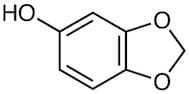
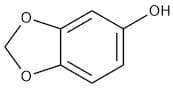
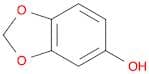
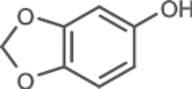
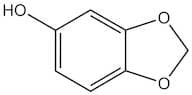
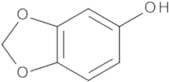
CAS 533-31-3
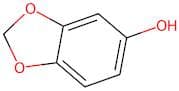
:Sesamol
- (3,4-Methylenedioxyphenol)
- 1,3-Benzodioxol-5-ol
- 1,3-Dioxaindan-5-ol
- 2H-1,3-Benzodioxol-5-ol
- 3,4-(Methylendioxy)phenol
- 3,4-(Methylenedioxy)phenol
- 3,4-(Metilenodioxi)Fenol
- 4-Hydroxy-1,2-methylenedioxybenzene
- 5-Hydroxy-1,3-benzodioxole
- Benzodioxol-5-ol
- Nsc 59256
- Phenol, 3,4-(methylenedioxy)-
- Sesamol
- 3,4-(METHYLENEDIOXY)PHENOL, SESAMOL
- SESAMOL 99+%
- Sesamol (Paroxetine intermediate)
- Sesamol,98%
- methyleneetherofoxyhydroquinone
- 5-Hydroxy-1,2-methylenedioxybenzene
- SESAMOL(RG)
- 5-BENZODIOXOLOL
- 3,4-METHYLENDIOXYPHENOL
- Methylene ether of oxyhydroquinone
- BENZO[1,3]DIOXOL-5-OL
- 3,4-(Methylenedioxy)phenol, 5-Benzodioxolol
- 3,4-(Methylenebisoxy)phenol
- See more synonyms
Sesamol
CAS:Formula:C7H6O3Purity:>98.0%(GC)Color and Shape:White to Light yellow to Light orange powder to crystalMolecular weight:138.12Sesamol, 98%
CAS:Sesamol has good antioxidant activity. Sesamol has potential protective effects against free radicals as well as some antifungal activity. Sesamol can also be used as an intermediate in the preparation of antidepressants such as Paroxetine (P205750). Sesamol has been found to be an antioxidant thatFormula:C7H6O3Purity:98%Color and Shape:Crystals or powder or crystalline powder, White to brownMolecular weight:138.125-Hydroxy-1,3-benzodioxole
CAS:5-Hydroxy-1,3-benzodioxoleFormula:C7H6O3Purity:≥95%Color and Shape: off-white solidMolecular weight:138.12g/molSesamol
CAS:Formula:C7H6O3Purity:(HPLC) ≥ 98.0%Color and Shape:Off-white to light yellow or light brown powderMolecular weight:138.12Paroxetine EP Impurity B
CAS:Controlled ProductFormula:C7H6O3Color and Shape:NeatMolecular weight:138.12Sesamol
CAS:Sesamol is regarded as a major antioxidant component in the oil with chemoprevention, radioprotective efficacy, anti-antiinflammary, antimutagenic, and antihepatotoxic activities. Sesamol inhibits melanin biosynthesis by down-regulating tyrosinase activity and melanin production via regulation of gene expression of melanogenesis-related proteins through modulation of MITF activity, which promotes phosphorylation of p38 and JNK in melan-a cells.Formula:C7H6O3Purity:95%~99%Molecular weight:138.122Sesamol
CAS:Sesamol (1,3-Benzodioxol-5-ol) could decrease lung inflammation and lipopolysaccharide (LPS)-induced lung injury in rats.
Formula:C7H6O3Purity:99.67% - 99.76%Color and Shape:White To Off-White Crystalline PowderMolecular weight:138.12Sesamol
CAS:Ether phenolFormula:C7H6O3Purity:≥ 98.0 % (HPLC)Color and Shape:PowderMolecular weight:138.12Sesamol
CAS:Controlled ProductImpurity Paroxetine Anhydrous EP Impurity B
Applications Sesamol (Paroxetine Anhydrous EP Impurity B) is a natural component of sesame oil with antioxidant activity. Sesamol has potential protective effects against free radicals as well as some antifungal activity. Sesamol can also be used as an intermediate in the preparation of antidepressants such as Paroxetine (P205750).
References Kim, J.Y. et al.: J. Agric. Food Chem., 51, 3460 (2003); Toshiko, O.: New Food Indust., 33, 1 (1991); Wynn, J.P. et al.: Lipids, 32, 605 (1997);Formula:C7H6O3Color and Shape:Off-WhiteMolecular weight:138.12Sesamol
CAS:Controlled ProductSesamol is a phenolic compound, which is a bioactive constituent derived from the oil of Sesamum indicum (sesame seeds). It acts as an antioxidant due to its ability to scavenge free radicals and inhibit lipid peroxidation, which are processes that can cause cellular and molecular damage. Sesamol's antioxidant efficacy is attributed to its structure, which facilitates the donation of hydrogen atoms to neutralize free radicals and stabilizes its own radical form.
Formula:C7H6O3Purity:Min. 95%Color and Shape:White To Beige To Light (Or Pale) Tan SolidMolecular weight:138.12 g/mol