CAS 5338-96-5
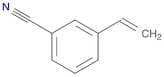
:3-Cyanostyrene
Description:
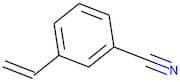
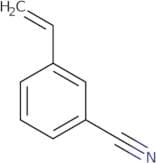
3-Cyanostyrene, with the CAS number 5338-96-5, is an organic compound characterized by its structure, which features a styrene backbone with a cyano group (-C≡N) positioned at the meta position relative to the vinyl group. This compound typically appears as a colorless to pale yellow liquid and is known for its aromatic properties due to the presence of the styrene moiety. It has a relatively low boiling point and is soluble in organic solvents, making it useful in various chemical applications. The cyano group contributes to its reactivity, allowing it to participate in nucleophilic addition reactions and polymerization processes. 3-Cyanostyrene is often utilized in the synthesis of polymers, pharmaceuticals, and other fine chemicals, owing to its ability to undergo further chemical transformations. Additionally, it exhibits fluorescence properties, which can be advantageous in certain applications, such as in the development of fluorescent materials or sensors. Safety precautions should be taken when handling this compound, as it may pose health risks upon exposure.
Formula:C20H18Cl2N4
InChI:InChI=1/C20H18Cl2N4/c1-12-13(2)23-20(15-7-5-4-6-8-15)24-19(12)26-25-14(3)16-9-10-17(21)18(22)11-16/h4-11H,1-3H3,(H,23,24,26)/b25-14+
Synonyms:- 3-Ethenylbenzonitrile
- 4-{(2E)-2-[1-(3,4-dichlorophenyl)ethylidene]hydrazino}-5,6-dimethyl-2-phenylpyrimidine
Sort by
Purity (%)
0
100
|
0
|
50
|
90
|
95
|
100
Found 3 products.
3-Ethenylbenzonitrile
CAS:3-Ethenylbenzonitrile is an organic compound that can be prepared by photolysis of 2-bromobenzonitrile in the presence of a nonpolar solvent. It is also synthesized by laser induced exciplex reaction between benzene and ethylene. 3-Ethenylbenzonitrile has a conformation that is dependent on the polarity of the solvent. In polar solvents, it adopts a bent structure while in nonpolar solvents, it adopts a linear structure. The molecule undergoes cyclobutane formation and then reacts with electron acceptors such as cations to form intermediates. These intermediates react with other molecules to form products.
Formula:C9H7NPurity:Min. 95%Molecular weight:129.16 g/molRef: 3D-FAA33896
Discontinued product