CAS 535-34-2
:cystathionine
Description:
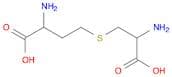
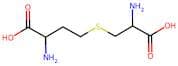
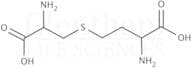
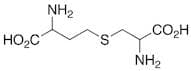
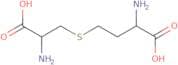
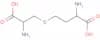
Cystathionine is a naturally occurring amino acid and a key intermediate in the transsulfuration pathway, which is involved in the metabolism of sulfur-containing amino acids, particularly methionine and cysteine. It is a dipeptide formed from the condensation of homocysteine and serine, and it plays a crucial role in the synthesis of cysteine. Cystathionine is characterized by its structural formula, which includes a thioether linkage and a carboxylic acid group, contributing to its reactivity and biological functions. It exists in two stereoisomeric forms, with the L-form being biologically active. In terms of solubility, cystathionine is soluble in water, which facilitates its biological interactions. Elevated levels of cystathionine in the body can be indicative of certain metabolic disorders, including homocystinuria. Additionally, cystathionine can be involved in various biochemical pathways, influencing cellular processes and contributing to the regulation of oxidative stress. Its CAS number, 535-34-2, is used for identification in chemical databases and regulatory contexts.
Formula:C7H14N2O4S
InChI:InChI=1/C7H14N2O4S/c8-4(6(10)11)1-2-14-3-5(9)7(12)13/h4-5H,1-3,8-9H2,(H,10,11)(H,12,13)/t4-,5?/m0/s1
InChI key:InChIKey=ILRYLPWNYFXEMH-UHFFFAOYSA-N
SMILES:C(CCSCC(C(O)=O)N)(C(O)=O)N
Synonyms:- (3Alpha,5Alpha,17Alpha)-Androstane-3,17-Diol
- 2-Amino-4-[(2-amino-2-carboxyethyl)sulfanyl]butanoic acid
- 2-Azaniumyl-4-(2-azaniumyl-2-carboxylatoethyl)sulfanylbutanoate
- <span class="text-smallcaps">DL</span>-Allocystathionine
- <span class="text-smallcaps">DL</span>-Cystathionine
- <span class="text-smallcaps">DL</span>-Homocysteine, S-(2-amino-2-carboxyethyl)-
- Butyric acid, α-amino-γ-(2-amino-2-carboxyethylmercapto)-
- Cystathionine, <span class="text-smallcaps">DL</span>-
- Cystathionine, DL-
- DL-Allocystathionine
- DL-Cystathionine
- DL-Homocysteine, S-(2-amino-2-carboxyethyl)-
- Homocysteine, S-(2-amino-2-carboxyethyl)-
- NSC 118379
- S-(2-Amino-2-carboxyethyl)-DL-homocysteine
- S-(2-Amino-2-carboxyethyl)homocysteine
- S-(2-amino-2-carboxyethyl)-L-homocysteine
- S-[(2R)-2-amino-2-carboxyethyl]-L-homocysteine
- DL,DL-allo-Cystathionine, S-(2-Amino-2-carboxyethyl)homocysteine
- CYSTATHIONINE
- dl,dl-allo-cystathionine
- -2-Amino-4-((2-amino-2-carboxyethyl)
- 2-amino-4-[(2-amino-3-hydroxy-3-keto-propyl)thio]butyric acid
- 2-amino-4-(2-amino-3-hydroxy-3-oxopropyl)sulfanylbutanoic acid
- D,L-CYSTATHIONINE
- 2-aMino-4-((2-aMino-2-carboxyethyl)thio)butanoic acid
- 2-azanyl-4-(2-azanyl-3-hydroxy-3-oxo-propyl)sulfanyl-butanoic acid
- Allocystathionine
- See more synonyms
Sort by
Purity (%)
0
100
|
0
|
50
|
90
|
95
|
100
Found 6 products.
(2S)-2-Amino-4-((2-amino-2-carboxyethyl)thio)butanoic acid
CAS:Formula:C7H14N2O4SPurity:97%Color and Shape:SolidMolecular weight:222.2621D,L-Cystathionine
CAS:Formula:C7H14N2O4SPurity:(HPLC) ≥ 90.0%Color and Shape:White to off-white powderMolecular weight:222.30D,L-Cystathionine
CAS:Controlled ProductApplications Intermediate for transsulfuration whereby a mammal transfers the sulfur of methionine via homocysteine to cysteine.
References Thompson, J.W., et al.: J. Biol. Chem., 266, 17011 (1991), Yoshida, Y., et al.: Microbiol., 148, 3961 (2002), Jiracek, J., et al.: J. Med. Chem., 49, 3982 (2006),Formula:C7H14N2O4SColor and Shape:NeatMolecular weight:222.26D,L-Cystathionine
CAS:Cystathionine is a sulfur-containing amino acid that is the precursor of cysteine. Cystathionine synthase, the enzyme that catalyzes the formation of cystathionine, is inhibited by L-cysteine and glutathione. Cystathionine has been shown to be an important growth factor for fibroblasts and osteoblasts in culture as well as a regulator of gene expression. It also has been shown to be essential for iron homeostasis, as it increases iron absorption from the gut and reduces iron excretion in bile. Cystathionine is a highly reactive molecule with a high redox potential and can cause oxidative injury to cells, which may contribute to bowel disease. Cystathionine has been shown to have receptor activity in neurons, and its physiological effects are similar to those of glutamate.Formula:C7H14N2O4SPurity:Min. 95%Color and Shape:PowderMolecular weight:222.26 g/mol