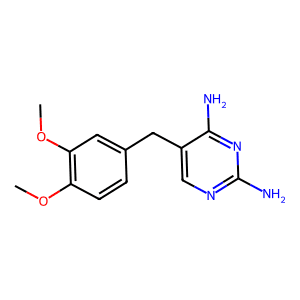
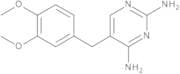
CAS 5355-16-8
:Diaveridine
Description:
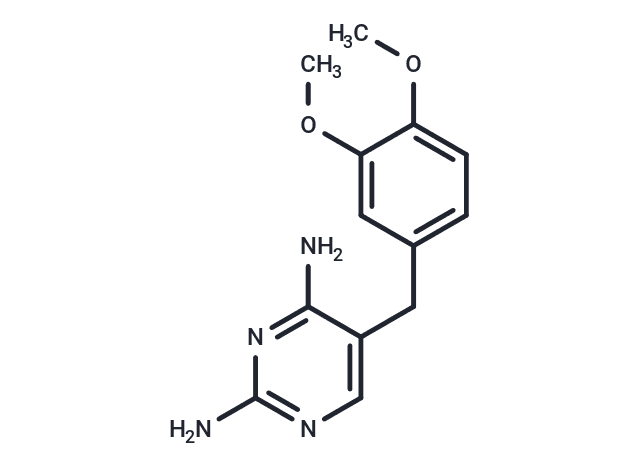
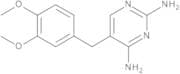
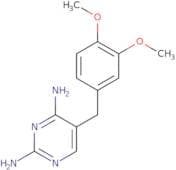
Diaveridine is a chemical compound classified as an antiviral agent, primarily used in the treatment of viral infections, particularly those caused by certain strains of the influenza virus. It is known for its ability to inhibit viral replication, making it a valuable therapeutic option in specific clinical settings. Diaveridine is characterized by its molecular structure, which includes a pyrimidine ring, contributing to its biological activity. The compound exhibits moderate solubility in water and is typically administered in a pharmaceutical formulation. Its mechanism of action involves interference with viral nucleic acid synthesis, thereby hindering the virus's ability to replicate within host cells. While it has shown efficacy in laboratory studies, the clinical use of diaveridine may be limited by factors such as resistance development and side effects. As with any antiviral medication, careful consideration of dosage and potential interactions with other drugs is essential for effective treatment. Overall, diaveridine represents a specific approach in antiviral therapy, highlighting the importance of ongoing research in the field of infectious diseases.
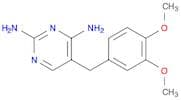
Formula:C13H16N4O2
InChI:InChI=1S/C13H16N4O2/c1-18-10-4-3-8(6-11(10)19-2)5-9-7-16-13(15)17-12(9)14/h3-4,6-7H,5H2,1-2H3,(H4,14,15,16,17)
InChI key:InChIKey=LDBTVAXGKYIFHO-UHFFFAOYSA-N
SMILES:C(C1=CC(OC)=C(OC)C=C1)C=2C(N)=NC(N)=NC2
Synonyms:- 2,4-Diamino-5-(3,4-Dimethoxy Benzyl)Pyrimidine
- 2,4-Diamino-5-(3,4-dimethoxybenzyl)pyrimidine
- 2,4-Diamino-5-Veratryl-Pyrimidin
- 2,4-Diamino-5-veratrylpyrimidine
- 2,4-Pyrimidinediamine, 5-[(3,4-dimethoxyphenyl)methyl]-
- 5-((3,4-Dimethoxyphenyl)Methyl)-4-Pyrimidinediamine
- 5-(3,4-Dimethoxy-Benzyl)-Pyrimidine-2,4-Diamine
- 5-(3,4-Dimethoxybenzyl)-2,4-Pyrimidinediamine
- 5-[(3,4-Dimethoxyphenyl)Methyl]-2,4-Pyrimidinediamine
- Bw 49-210
- Diaveridin
- Egis 5645
- NSC 408735
- See more synonyms
Sort by
Purity (%)
0
100
|
0
|
50
|
90
|
95
|
100
Found 15 products.
Diaveridine (5-(3,4-Dimethoxybenzyl)pyrimidine-2,4-diamine)
CAS:Compounds containing a pyrimidine ring (whether or not hydrogenated) or piperazine ring in the structure, nesoiFormula:C13H16N4O2Color and Shape:Pale Yellow SolidMolecular weight:260.12733Diaveridine
CAS:Diaveridine (AI3-23935) (DVD) is a popular antibacterial synergist that is widely used in combination with sulfonamide.Formula:C13H16N4O2Purity:99.10%Color and Shape:White SolidMolecular weight:260.292,4-Diamino-5-(3,4-dimethoxybenzyl)pyrimidine
CAS:Formula:C13H16N4O2Purity:99%Color and Shape:SolidMolecular weight:260.2917Diaveridine 10 µg/mL in Acetonitrile
CAS:Formula:C13H16N4O2Color and Shape:Single SolutionMolecular weight:260.29Diaveridine
CAS:Controlled ProductApplications Diaveridine is a dihydrofolate reductase inhibitor. It is used in veterinary medicine as a drug for its anticoccidial properties and its function as an antibacterial synergist.
References Wang, H., et al.: J. Chromatogr. B., 965, 91 (2014); Wang, X., et al.: Regul. Toxicol. Pharm., 73, 232 (2015); Sporri, S., et al.: Food. Addit. Contam. A., 31, 806 (2014)Formula:C13H16N4O2Color and Shape:NeatMolecular weight:260.29Diaveridine
CAS:Diaveridine is a compound that is used as a model organism for the study of antimicrobial agents. It has been shown to have an acidic effect on inorganic acids and hydrochloric acid, and also inhibit the growth of sulfa drugs. Diaveridine is toxic to both mice and rats with LD50 values of 16 mg/kg and 8 mg/kg respectively. This compound has synergistic effects when combined with nonsteroidal anti-inflammatory drugs such as ibuprofen. Diaveridine can be used to produce monoclonal antibodies against target proteins.Formula:C13H16N4O2Purity:Min. 95%Color and Shape:Off-White PowderMolecular weight:260.29 g/mol