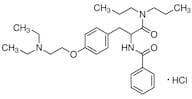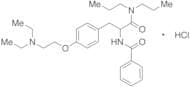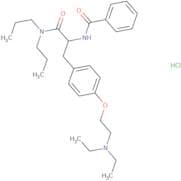
CAS 53567-47-8
:Tiropramide hydrochloride
Description:
Tiropramide hydrochloride is a synthetic compound primarily used as an analgesic and antispasmodic agent. It belongs to the class of medications known as non-opioid analgesics and is often utilized in the treatment of various types of pain, particularly those associated with gastrointestinal disorders. The substance exhibits properties that allow it to modulate pain perception and reduce muscle spasms. Tiropramide hydrochloride is characterized by its ability to interact with specific receptors in the central nervous system, contributing to its therapeutic effects. The compound is typically administered in oral form and is well-absorbed in the gastrointestinal tract. Its pharmacokinetics involve metabolism in the liver, with excretion primarily through the kidneys. As with any medication, potential side effects may include gastrointestinal disturbances, dizziness, or allergic reactions, necessitating careful monitoring during use. Overall, Tiropramide hydrochloride is recognized for its efficacy in managing pain and discomfort, particularly in clinical settings related to digestive health.
Formula:C28H41N3O3HCl
Synonyms:- N-[2-[4-(2-Diethylaminoethoxy)phenyl]-1-(dipropylcarbamoyl)ethyl]benzamide hydrochloride
Sort by
Purity (%)
0
100
|
0
|
50
|
90
|
95
|
100
Found 5 products.
Tiropramide Hydrochloride
CAS:Formula:C28H41N3O3·HClPurity:>98.0%(T)(HPLC)Color and Shape:White to Almost white powder to crystalMolecular weight:504.11N-[2-[4-(2-DIETHYLAMINOETHOXY)PHENYL]-1-(DIPROPYLCARBAMOYL)ETHYL]BENZAMIDE HYDROCHLORIDE
CAS:Formula:C28H42ClN3O3Purity:98%Color and Shape:SolidMolecular weight:504.1044Tiropramide Hydrochloride
CAS:Controlled ProductApplications Tiropramide is an antispasmodic agent. Studies suggest that Tiropramide has a pure musculotropic smooth muscle relaxant activity. Tiropramide is considered to be useful to inhibit the contractile response of the urinary bladder.
References Myung, S.-W. et al.: J. Appl. Pharmacol., 8, 262 (2000); Kwon, O.-S. et al.: Arzneim.-Forsch., 53, 578 (2003); Jhee, O.H. et al.: Clin. Chim. Acta, 366, 179 (2006); Takayanagi, I. et al.: Gen, Pharmacol., 20, 335 (1989);Formula:C28H41N3O3·ClHColor and Shape:NeatMolecular weight:504.10Tiropramide Hydrochloride
CAS:Controlled ProductTiropramide hydrochloride is a medication that is used to treat urinary tract infection. It is an inhibitor of the enzyme, acetylcholinesterase, which has been shown to have an inhibitory effect on the bladder and urethra. Tiropramide hydrochloride has been shown to be safe for human use in doses up to 2 grams per day. The terminal half-life of tiropramide hydrochloride is approximately 20 hours, which means it takes about this long for the body to eliminate 50% of the drug. Toxicity studies reveal that tiropramide hydrochloride does not cause any significant toxicity in humans when taken orally as directed. Tiropramide hydrochlored can be used as a pharmaceutical dosage for people with high blood pressure or papaverine-induced priapism (a persistent erection). Tiropramide hydrochlored can also be delivered intravenously or intramuscularly. When administered intravenously, tiFormula:C28H41N3O3·HClPurity:Min. 95%Molecular weight:504.11 g/mol