CAS 53645-99-1
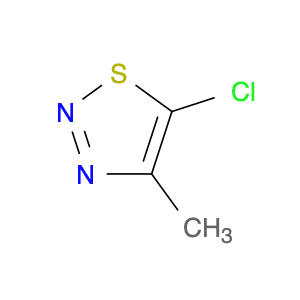
:5-Chloro-4-methyl-1,2,3-thiadiazole
Description:
5-Chloro-4-methyl-1,2,3-thiadiazole is a heterocyclic compound characterized by a five-membered ring containing two nitrogen atoms, one sulfur atom, and a chlorine substituent. This compound typically exhibits a pale yellow to light brown appearance and is known for its distinct thiadiazole structure, which contributes to its chemical reactivity and potential applications. The presence of the chlorine atom enhances its electrophilic properties, making it useful in various chemical reactions, including synthesis and as an intermediate in the production of agrochemicals and pharmaceuticals. Additionally, the methyl group at the 4-position can influence the compound's solubility and stability. 5-Chloro-4-methyl-1,2,3-thiadiazole is often studied for its biological activity, including antimicrobial and herbicidal properties, making it of interest in both medicinal and agricultural chemistry. Safety data should be consulted for handling and usage, as with many chemical substances, to ensure proper precautions are taken.
Formula:C3H3ClN2S
InChI:InChI=1/C3H3ClN2S/c1-2-3(4)7-6-5-2/h1H3
InChI key:InChIKey=RRQBJFBRLOWLJR-UHFFFAOYSA-N
SMILES:CC1=C(Cl)SN=N1
Synonyms:- 5-Chloro-4-methyl-1,2,3-thiadiazole
- 1,2,3-Thiadiazole, 5-chloro-4-methyl-
- 5-chloro-4-methylthiadiazole
- See more synonyms
Sort by
Purity (%)
0
100
|
0
|
50
|
90
|
95
|
100
Found 3 products.
5-Chloro-4-methyl-1,2,3-thiadiazole
CAS:5-Chloro-4-methyl-1,2,3-thiadiazolePurity:95%Molecular weight:134.59g/mol5-Chloro-4-methyl-1,2,3-thiadiazole
CAS:<p>5-Chloro-4-methyl-1,2,3-thiadiazole is a long chain derivative of thiadiazole. It has been found to have anticancer activity in vitro against prostate cancer cells. 5-Chloro-4-methyl-1,2,3-thiadiazole inhibits the growth of cancer cells by blocking fatty acid metabolism and inhibiting the production of carnitine. This agent also induces carboxyamide reductase and alcohol dehydrogenase activities in vitro. The anticancer effect is not restricted to prostate cancer cells; it has also been shown to inhibit human glioma cell proliferation in vitro.</p>Formula:C3H3ClN2SPurity:Min. 95%Molecular weight:134.58 g/mol