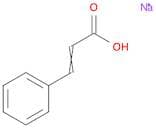
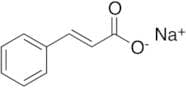
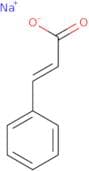
CAS 538-42-1
:Sodium cinnamate
Description:
Sodium cinnamate is the sodium salt of cinnamic acid, characterized by its chemical formula C9H7NaO2. It appears as a white to off-white crystalline powder and is soluble in water, which makes it useful in various applications. Sodium cinnamate is known for its role as a flavoring agent and preservative in the food industry, as well as its potential use in cosmetics and pharmaceuticals due to its antimicrobial properties. The compound exhibits a mild, sweet, and slightly spicy flavor profile, which contributes to its use in food products. Additionally, sodium cinnamate has been studied for its potential health benefits, including antioxidant and anti-inflammatory effects. However, like many chemical substances, it should be handled with care, as it may cause irritation upon contact with skin or eyes. Overall, sodium cinnamate is valued for its functional properties in both food and cosmetic formulations, while also being a subject of ongoing research for its biological activities.
Formula:C9H8O2·Na
InChI:InChI=1S/C9H8O2.Na/c10-9(11)7-6-8-4-2-1-3-5-8;/h1-7H,(H,10,11);
InChI key:InChIKey=GSZVVJCRKFJSRO-UHFFFAOYSA-N
SMILES:C(=CC(O)=O)C1=CC=CC=C1.[Na]
Synonyms:- Sodium cinnamate
- 2-Propenoic acid, 3-phenyl-, sodium salt (1:1)
- Cinnamic acid, sodium salt
- Fortificar
- 2-Propenoic acid, 3-phenyl-, sodium salt
Sort by
Purity (%)
0
100
|
0
|
50
|
90
|
95
|
100
Found 3 products.
2-Propenoic acid, 3-phenyl-, sodium salt
CAS:Formula:C9H7NaO2Purity:98%Color and Shape:SolidMolecular weight:170.14042-(1,3-Dioxo-1,3-dihydro-isoindol-2-yl)-benzoic Acid
CAS:Controlled ProductFormula:C9H7O2·NaColor and Shape:NeatMolecular weight:170.141Sodium cinnamate
CAS:Sodium cinnamate is an organic compound that is a derivative of 4-hydroxycinnamic acid. It forms sodium salts with water vapor, which are soluble in water. Sodium cinnamate has been shown to have genotoxic activity, and may be used as a potential anticancer drug. Sodium cinnamate also binds to toll-like receptors on the surface of cells, which activate inflammatory signaling pathways. This compound also inhibits enzymes involved in infectious diseases such as influenza A virus and herpes simplex virus type 1 replication. Caffeic acids, chlorogenic acids, and pge2 levels were shown to be increased after treatment with sodium cinnamate.Formula:C9H7NaO2Purity:Min. 95 Area-%Color and Shape:PowderMolecular weight:170.14 g/mol