CAS 5382-43-4
:6-Quinolinecarboxamide
Description:
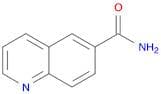
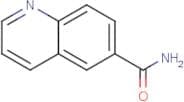
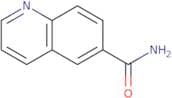
6-Quinolinecarboxamide, with the CAS number 5382-43-4, is an organic compound characterized by its quinoline structure, which consists of a fused benzene and pyridine ring. This compound features a carboxamide functional group (-C(=O)NH2) at the 6-position of the quinoline ring, contributing to its chemical reactivity and potential biological activity. It is typically a crystalline solid, exhibiting moderate solubility in polar solvents due to the presence of the amide group, which can engage in hydrogen bonding. 6-Quinolinecarboxamide is of interest in medicinal chemistry for its potential pharmacological properties, including antimicrobial and antitumor activities. The compound's structure allows for various modifications, which can enhance its biological efficacy or alter its physicochemical properties. Additionally, it may serve as a building block in the synthesis of more complex molecules in organic synthesis. As with many quinoline derivatives, it is essential to handle this compound with care, considering its potential toxicity and the need for appropriate safety measures in laboratory settings.
Formula:C10H8N2O
InChI:InChI=1S/C10H8N2O/c11-10(13)8-3-4-9-7(6-8)2-1-5-12-9/h1-6H,(H2,11,13)
InChI key:InChIKey=YMNAJWHTELQUJU-UHFFFAOYSA-N
SMILES:C(N)(=O)C1=CC2=C(C=C1)N=CC=C2
Synonyms:- 6-Quinolinecarboxamide
Sort by
Purity (%)
0
100
|
0
|
50
|
90
|
95
|
100
Found 4 products.
Quinoline-6-carboxamide
CAS:Quinoline-6-carboxamide is a drug that binds to the CB2 receptor and inhibits cancer cell proliferation. It has been shown to be effective in inhibiting human cervical carcinoma cells, as well as hydroxy group corrosion inhibitors. Quinoline-6-carboxamide also inhibits the growth of diabetic neuropathy and acts as an amide skeleton binder in binding experiments. The compound has been shown to have anti-inflammatory effects in animal models of pain, acting through the metabotropic glutamate receptor. Quinoline-6-carboxamide also blocks herpes simplex virus replication, which may be due to its ability to inhibit viral DNA synthesis.
Formula:C10H8N2OPurity:Min. 95%Molecular weight:172.19 g/mol