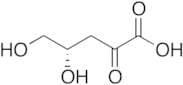
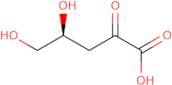
CAS 53857-83-3
:(4S)-4,5-Dihydroxy-2-oxopentanoic acid
Description:
(4S)-4,5-Dihydroxy-2-oxopentanoic acid, with the CAS number 53857-83-3, is an organic compound characterized by its structure, which includes a pentanoic acid backbone with two hydroxyl groups and a ketone functional group. This compound is a chiral molecule, specifically existing in the S configuration at the fourth carbon atom, which influences its biological activity and interactions. It is typically found in biochemical pathways, particularly in the metabolism of certain amino acids and carbohydrates. The presence of hydroxyl groups contributes to its hydrophilicity, making it soluble in water and reactive in various chemical environments. This compound may play a role in enzymatic reactions and can serve as an intermediate in the synthesis of other biologically relevant molecules. Its properties, such as melting point, boiling point, and reactivity, can vary depending on the conditions and the presence of other substances in the environment. Overall, (4S)-4,5-Dihydroxy-2-oxopentanoic acid is significant in both synthetic and natural biochemical processes.
Formula:C5H8O5
InChI:InChI=1S/C5H8O5/c6-2-3(7)1-4(8)5(9)10/h3,6-7H,1-2H2,(H,9,10)/t3-/m0/s1
InChI key:InChIKey=UQIGQRSJIKIPKZ-VKHMYHEASA-N
SMILES:C(C(C(O)=O)=O)[C@@H](CO)O
Synonyms:- (4S)-4,5-Dihydroxy-2-oxopentanoic acid
- Pentanoic acid, 4,5-dihydroxy-2-oxo-, (4S)-
- 3-Deoxy-D-pentulosonic acid
- Pentanoic acid, 4,5-dihydroxy-2-oxo-, (S)-
Sort by
Purity (%)
0
100
|
0
|
50
|
90
|
95
|
100
Found 2 products.
3-Deoxy-D-pentulosonic Acid
CAS:Controlled ProductFormula:C5H8O5Color and Shape:NeatMolecular weight:148.1143-Deoxy-2-keto-D-xylonate lithium
CAS:3-Deoxy-2-keto-D-xylonate lithium salt is a synthetic compound that is used in the synthesis of protamine. It is produced by the reduction of an aldehyde with borohydride. 3-Deoxy-2-keto-D-xylonate lithium salt has been shown to be active against E. cloacae, which can cause diarrhea and other gastrointestinal disorders. 3-Deoxy-2-keto-D-xylonate lithium salt inhibits the growth of E. cloacae by inhibiting glycolaldehyde reductase and aldolases, which are enzymes that are essential for glycolysis and citrate metabolism, respectively. The cleavage products formed by this reaction inhibit bacterial growth by interfering with cell wall biosynthesis, preventing protein synthesis, or blocking ATP production (oxidative phosphorylation).Formula:C5H8O5•LixPurity:Min. 95%Color and Shape:PowderMolecular weight:148.11 g/mol