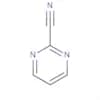
CAS 53896-49-4
:3-Pyridazinecarbonitrile
Description:
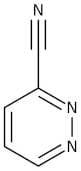
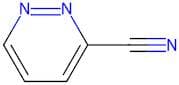
3-Pyridazinecarbonitrile, with the CAS number 53896-49-4, is an organic compound characterized by its pyridazine ring structure, which is a six-membered aromatic heterocycle containing two nitrogen atoms at positions 1 and 2. This compound features a cyano group (-C≡N) attached to the carbon atom at the 3-position of the pyridazine ring, contributing to its reactivity and potential applications in various chemical syntheses. 3-Pyridazinecarbonitrile is typically a colorless to pale yellow solid, and it is soluble in polar organic solvents. The presence of the cyano group imparts significant polarity and can influence the compound's interactions in biological systems, making it of interest in medicinal chemistry and agrochemical research. Additionally, its unique structure allows for potential derivatization, which can lead to the development of novel compounds with specific biological or chemical properties. Safety data should be consulted for handling and storage, as with all chemical substances.
Formula:C5H3N3
Synonyms:- Pyridazine-3-Carbonitrile
- 3-Cyanopyridazine
Sort by
Purity (%)
0
100
|
0
|
50
|
90
|
95
|
100
Found 5 products.
3-Cyanopyridazine, 97%
CAS:This Thermo Scientific Chemicals brand product was originally part of the Alfa Aesar product portfolio. Some documentation and label information may refer to the legacy brand. The original Alfa Aesar product / item code or SKU reference has not changed as a part of the brand transition to Thermo SciFormula:C5H3N3Purity:97%Color and Shape:Powder, Cream to brownMolecular weight:105.10Pyridazine-3-carbonitrile
CAS:Pyridazine-3-carbonitrileFormula:C5H3N3Purity:95%Color and Shape: brown to dark beige crystalline powderMolecular weight:105.10g/mol3-Cyanopyridazine
CAS:3-Cyanopyridazine is an organic compound that is structurally related to pyridazine. It has been shown to form covalent adducts with peptides or proteins, including glutathione and aprotinin. 3-Cyanopyridazine has also been shown to form covalent adducts with the active site of heterocycles such as 5-fluorouracil, 5-fluorodeoxyuridine, and 5-fluoroindole. These adducts are formed by nucleophilic addition of 3-cyanopyridazine to electrophilic sites on the heterocycles. The mechanism of these reactions is not yet understood but may involve a combination of electrophilic attack on the heterocycle and nucleophilic attack on the pyridazinium ion. 3-Cyanopyridazine can be converted into its conjugates in vivo, which may contribute to itsPurity:Min. 95%