CAS 54141-72-9
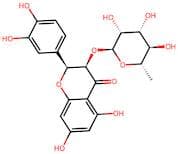
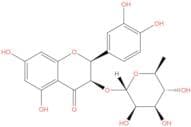
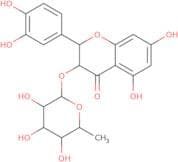
:2-(3,4-dihydroxyphenyl)-5,7-dihydroxy-4-oxo-3,4-dihydro-2H-chromen-3-yl 6-deoxyhexopyranoside
Neoisoastilbin
CAS:Neoisoastilbin may have antioxidant and anti-inflammatory activities.Formula:C21H22O11Purity:99.71% - 99.85%Color and Shape:SolidMolecular weight:450.39Neoisoastilbin
CAS:Neoisoastilbin is a chemical compound, specifically a flavonoid derivative, derived primarily from natural botanical sources such as certain species of plants. It is characterized by its unique structural configuration which distinguishes it from its closely related isomers. As a flavonoid, Neoisoastilbin acts through multiple biochemical pathways, notably by scavenging free radicals and modulating oxidative stress responses, which can have significant implications in biological systems.Neoisoastilbin's notable applications lie in its potential antioxidant properties, which are of particular interest in the fields of pharmacology and biochemistry. Researchers study its effects on cellular models to understand its role in protecting cells from oxidative damage. It also has potential applications in the development of therapeutic agents aiming to mitigate conditions associated with oxidative stress, such as neurodegenerative diseases or cardiovascular disorders. Investigations into its pharmacodynamics and pharmacokinetics are essential to elucidate its full potential and mechanisms within complex biological systems.
Formula:C21H22O11Purity:Min. 95%Molecular weight:450.39 g/mol