CAS 54198-89-9
:5-chloro-2-methylpyrimidine
Description:
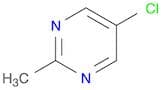
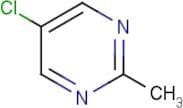
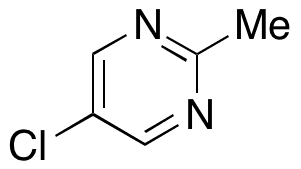
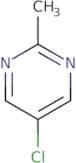
5-Chloro-2-methylpyrimidine is a heterocyclic organic compound characterized by a pyrimidine ring, which is a six-membered aromatic ring containing two nitrogen atoms at positions 1 and 3. The presence of a chlorine atom at the 5-position and a methyl group at the 2-position contributes to its unique chemical properties. This compound is typically a colorless to pale yellow liquid or solid, depending on its form and purity. It is soluble in organic solvents and exhibits moderate stability under standard conditions. 5-Chloro-2-methylpyrimidine is of interest in medicinal chemistry and agrochemicals, often serving as an intermediate in the synthesis of pharmaceuticals and other biologically active compounds. Its reactivity is influenced by the electron-withdrawing nature of the chlorine atom, which can affect nucleophilic substitution reactions. Additionally, the compound may exhibit biological activity, making it a subject of research in various fields, including drug development and agricultural chemistry. Proper handling and safety measures are essential due to its potential toxicity and environmental impact.
Formula:C5H5ClN2
InChI:InChI=1/C5H5ClN2/c1-4-7-2-5(6)3-8-4/h2-3H,1H3
SMILES:Cc1ncc(cn1)Cl
Synonyms:- Pyrimidine, 5-Chloro-2-Methyl-
- 5-Chloro-2-methylpyrimidine
Sort by
Purity (%)
0
100
|
0
|
50
|
90
|
95
|
100
Found 5 products.
5-Chloro-2-methylpyrimidine
CAS:Formula:C5H5ClN2Purity:95%Color and Shape:SolidMolecular weight:128.55965-Chloro-2-methylpyrimidine
CAS:5-Chloro-2-methylpyrimidinePurity:95%Color and Shape:SolidMolecular weight:128.56g/mol5-Chloro-2-methylpyrimidine
CAS:Formula:C5H5ClN2Purity:98%Color and Shape:Liquid, No data available.Molecular weight:128.565-Chloro-2-methylpyrimidine
CAS:Controlled ProductFormula:C5H5ClN2Color and Shape:NeatMolecular weight:128.565-Chloro-2-methylpyrimidine
CAS:5-Chloro-2-methylpyrimidine is a chemical compound that has two methyl substituents and one chlorine substituent. It is an unlabeled intermediate in the synthesis of pyrazoles, which are substituted pyrimidines. 5-Chloro-2-methylpyrimidine can be synthesized by reacting chloroform with 1-methylimidazole in the presence of dichlorocarbene as a catalyst. The reaction mechanism may involve formation of a chloroformate and subsequent addition to 1-methylimidazole to give 5-chloroimidazolone. This then reacts with dichlorocarbene to give 2,5,6-trichloropyrimidine, which can be oxidized to 5-chloro2,5,6,-dimethylpyrimidine.
Purity:Min. 95%