CAS 5448-43-1
:6-Chloroquinoxaline
Description:
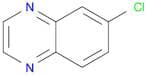
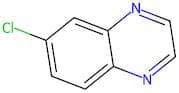
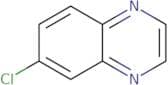
6-Chloroquinoxaline is a heterocyclic compound characterized by a fused bicyclic structure containing both a benzene and a pyrazine ring. Its molecular formula is C8H6ClN3, indicating the presence of chlorine, carbon, hydrogen, and nitrogen atoms. This compound typically appears as a yellow to light brown solid and is known for its role in various chemical and biological applications, including its potential as a pharmacological agent. 6-Chloroquinoxaline exhibits moderate solubility in organic solvents, such as ethanol and dimethyl sulfoxide, but is less soluble in water. The presence of the chlorine atom at the 6-position of the quinoxaline ring influences its reactivity and biological activity, making it a subject of interest in medicinal chemistry. Additionally, it can participate in various chemical reactions, including nucleophilic substitutions and cycloadditions, which are valuable in synthetic organic chemistry. Overall, 6-Chloroquinoxaline serves as a versatile building block in the development of new compounds with potential therapeutic applications.
Formula:C8H5ClN2
InChI:InChI=1/C8H5ClN2/c9-6-1-2-7-8(5-6)11-4-3-10-7/h1-5H
SMILES:c1cc2c(cc1Cl)nccn2
Synonyms:- Quinoxaline, 6-chloro-
Sort by
Purity (%)
0
100
|
0
|
50
|
90
|
95
|
100
Found 4 products.
6-Chloroquinoxaline
CAS:<p>6-Chloroquinoxaline</p>Formula:C8H5ClN2Purity:≥95%Color and Shape: brown solidMolecular weight:164.59g/mol7-Chloroquinoxaline
CAS:<p>7-Chloroquinoxaline is a nucleophilic compound that can be synthesized by reductive chlorination of 7-chloroquinoline. 7-Chloroquinoxaline has been shown to have anticancer activity in vitro, as well as the ability to inhibit the proliferation of human breast cancer cells (MCF-7) in culture. It also inhibits glyoxalase I and II, which are enzymes that catalyze the conversion of glyoxal to D-lactate and H2O2. This inhibition may be due to its ability to react with the C=N bond at carbon 2 of dimethylformamide (DMF), forming a covalent adduct with DMF and an anticancer agent such as methotrexate or 5-fluorouracil. The formation of this conjugate would result in a decrease in DMF concentration, leading to decreased production of H2O2 and increased levels of D-l</p>Formula:C8H5ClN2Purity:Min. 95%Molecular weight:164.59 g/mol