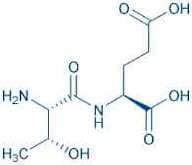
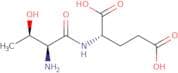
CAS 54532-73-9
:L-Glutamic acid, N-L-threonyl-
Description:
L-Glutamic acid, N-L-threonyl- is a derivative of the amino acid L-glutamic acid, which is a non-essential amino acid important in various metabolic processes. This compound features a threonyl group attached to the nitrogen of the glutamic acid, which may influence its biochemical properties and interactions. Typically, amino acids like L-glutamic acid are characterized by their ability to act as neurotransmitters, particularly in the central nervous system, where they play a crucial role in synaptic transmission and plasticity. The presence of the threonyl group may enhance its solubility and reactivity in biological systems. In terms of physical properties, derivatives of amino acids often exhibit high polarity due to the presence of functional groups, which can affect their behavior in solution and their interactions with other biomolecules. Additionally, such compounds may have applications in pharmaceuticals, nutrition, and biochemistry, particularly in the development of peptides and proteins. However, specific characteristics such as melting point, solubility, and stability would require empirical data for precise evaluation.
Formula:C9H16N2O6
Sort by
Purity (%)
0
100
|
0
|
50
|
90
|
95
|
100
Found 2 products.
H-Thr-Glu-OH
CAS:Bachem ID: 4016437.
Formula:C9H16N2O6Purity:> 99%Color and Shape:White PowderMolecular weight:248.24H-Thr-Glu-OH
CAS:H-Thr-Glu-OH is a nucleotide that is a component of RNA. It is one of the 20 natural amino acids and it is found in proteins as well as in RNA molecules. H-Thr-Glu-OH can be synthesized by hydrolysis of proteins with an enzyme called glutamic acid hydrolase. H-Thr-Glu-OH has been shown to have a high affinity for lysine, which has been shown to be required for the enzymatic activity of many protein enzymes. This amino acid can also be found in large quantities in cheese, soy sauce, and yogurt.
Formula:C9H16N2O6Purity:Min. 98 Area-%Color and Shape:PowderMolecular weight:248.23 g/molRef: 3D-FT108272
Discontinued product