CAS 5462-86-2
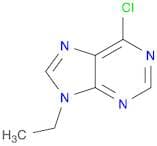
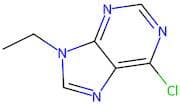
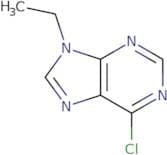
:6-chloro-9-ethyl-9H-purine
Description:
6-Chloro-9-ethyl-9H-purine is a purine derivative characterized by the presence of a chlorine atom at the 6-position and an ethyl group at the 9-position of the purine ring system. This compound is part of a class of heterocyclic organic compounds that play significant roles in biochemistry, particularly in the structure of nucleotides and nucleic acids. Its molecular structure contributes to its potential biological activity, which may include interactions with enzymes or receptors in various biochemical pathways. The presence of the chlorine substituent can influence the compound's solubility, reactivity, and overall pharmacological properties. Typically, purine derivatives are of interest in medicinal chemistry for their potential applications in drug development, particularly in the fields of antiviral and anticancer therapies. Additionally, the compound's stability, melting point, and solubility in various solvents are important characteristics that can affect its utility in research and pharmaceutical applications.
Formula:C7H7ClN4
InChI:InChI=1/C7H7ClN4/c1-2-12-4-11-5-6(8)9-3-10-7(5)12/h3-4H,2H2,1H3
SMILES:CCn1cnc2c(Cl)ncnc12
Synonyms:- 6-Chloro-9-ethylpurine
- 9H-purine, 6-chloro-9-ethyl-
- 6-Chloro-9-ethyl-9H-purine
Sort by
Purity (%)
0
100
|
0
|
50
|
90
|
95
|
100
Found 4 products.
6-Chloro-9-ethyl-9H-purine
CAS:Formula:C7H7ClN4Purity:97%Color and Shape:SolidMolecular weight:182.61036-Chloro-9-ethyl-9H-purine
CAS:6-Chloro-9-ethyl-9H-purine (6C9E) is a deaminated nucleoside that can be synthesized from the purine nucleosides, 6-chloropurine and 9-ethyladenine. The terminal alkynes of 6C9E are able to react with azides to form triazoles. This reaction is an example of nucleophilic substitution and has been shown to be reversible. 6C9E has potential as a fluorescent marker in organic synthesis due to its ability to fluoresce under UV light. It also reacts with carbon tetrachloride leading to the formation of chloroform and hydrogen chloride gas, which can be detected by smell or by luminescence.Formula:C7H7ClN4Purity:Min. 95%Molecular weight:182.61 g/mol