CAS 54660-06-9
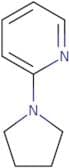
:Pyridine, 2-(1-pyrrolidinyl)-
Description:
Pyridine, 2-(1-pyrrolidinyl)-, also known as 2-(1-pyrrolidinyl)pyridine, is a heterocyclic organic compound characterized by the presence of both a pyridine ring and a pyrrolidine moiety. This compound features a six-membered aromatic ring containing one nitrogen atom (pyridine) and a five-membered saturated ring (pyrrolidine) that contributes to its unique properties. It is typically a colorless to pale yellow liquid with a distinctive odor. The presence of the nitrogen atoms in both rings influences its basicity and reactivity, making it a potential candidate for various chemical reactions, including nucleophilic substitutions and coordination with metal ions. Pyridine derivatives are often used in the synthesis of pharmaceuticals, agrochemicals, and as solvents or intermediates in organic chemistry. The compound's solubility in polar solvents and its ability to form hydrogen bonds enhance its utility in various applications. Safety considerations include its potential toxicity and irritant properties, necessitating appropriate handling and storage measures.
Formula:C9H12N2
Sort by
Purity (%)
0
100
|
0
|
50
|
90
|
95
|
100
Found 1 products.
2-(Pyrrolidin-1-yl)pyridine
CAS:2-(Pyrrolidin-1-yl)pyridine is a chiral compound that belongs to the group of nucleophilic compounds. It can be synthesized in two different configurations, as either the erythro or threo isomer. The synthesis of 2-(pyrrolidin-1-yl)pyridine requires an asymmetric synthesis and involves the reaction of an acyl chloride with 2,6-dichloropyrimidine. The erythro isomer has been shown to have receptor activity at cb2 receptors and has been shown to reduce inflammation in animal models. The threo isomer has been shown to have reduced activity at cb2 receptors and does not show anti-inflammatory properties.
Formula:C9H12N2Purity:Min. 95%Molecular weight:148.2 g/mol