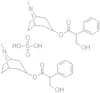
CAS 55-48-1
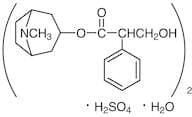
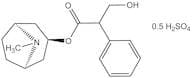
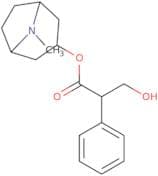
:Atropine sulfate
- (3-Endo)-8-Methyl-8-Azabicyclo[3.2.1]Oct-3-Yl 3-Hydroxy-2-Phenylpropanoate Sulfate (1:1)
- 1α<span class="text-smallcaps">H</smallcap>,5α<smallcap>H</span>-Tropan-3α-ol (±)-tropate (ester), sulfate (2:1) (salt)
- 1αH,5αH-Tropan-3α-ol (.+-.)-tropate (ester), sulfate (2:1) (salt)
- 8-Methyl-8-Azabicyclo[3.2.1]Oct-3-Yl 3-Hydroxy-2-Phenylpropanoate Sulfate (2:1)
- Atropette
- Atropine Minims
- Atropine Sulfate
- Atropine Sulfate, Atropa belladonna L.
- Atropinesulfate
- Atropinium sulfate
- Atropinsal
- Atropinsulfat
- Atropisal
- Atropisol
- Atropisol Ophthalmic Solution
- Benzeneacetic acid, α-(hydroxymethyl)- (3-endo)-8-methyl-8-azabicyclo[3.2.1]oct-3-yl ester, sulfate (2:1) (salt)
- Benzeneacetic acid, α-(hydroxymethyl)- (3-endo)-8-methyl-8-azabicyclo[3.2.1]oct-3-yl ester, sulfate (2:1)
- Benzeneacetic acid, α-(hydroxymethyl)- 8-methyl-8-azabicyclo[3.2.1]oct-3-yl ester endo-(.+-.)-, sulfate (2:1) (salt)
- Bis{(3-Endo)-3-[(3-Hydroxy-2-Phenylpropanoyl)Oxy]-8-Methyl-8-Azoniabicyclo[3.2.1]Octane} Sulfate
- Corbella
- Davurtrop
- Eyesule
- Ichtho-Bellol
- Isopto Atropine
- Lio-Atropin
- MBK
- Nsc 26671
- PHENYLACETATE, α-(HYDROXYMETHYL)-8-METHYL-8-AZABICYCLO[3.2.1]OCT-3-YL, SULFATE, ENDO-
- Sulfate d'atropine
- Sulfato De Atropina
- Sulfatropinol
- See more synonyms
Atropine Sulfate Monohydrate
CAS:Formula:C34H46N2O6·H2SO4·H2OPurity:>99.0%(T)Color and Shape:White to Almost white powder to crystalineMolecular weight:694.84Atropine Sulfate
CAS:Formula:C17H23NO3·5H2SO4Color and Shape:White To Off-White SolidMolecular weight:289.38 0.5*98.07Atropine sulfate
CAS:Natural alkaloidFormula:C17H23NO3·5H2SO4Purity:≥ 98.0 % (HPLC)Color and Shape:CrystallineMolecular weight:338.41Atropine sulfate anhydrous
CAS:Atropine sulfate anhydrous is a potent pharmaceutical compound classified as a muscarinic antagonist, specifically functioning as an anticholinergic agent. Deriving from natural alkaloids found in plants such as Atropa belladonna, its primary mode of action involves competitive inhibition of acetylcholine at muscarinic receptors. This blockade leads to a reduction in parasympathetic nervous system activities, affecting various physiological processes.
Formula:C34H48N2O10SPurity:Min. 98 Area-%Color and Shape:PowderMolecular weight:676.82 g/molAtropine sulfate anhydrous
CAS:Atropine sulfate anhydrous is a potent anticholinergic agent, which is derived from natural sources such as the plant Atropa belladonna. It functions by competitively inhibiting the action of acetylcholine on muscarinic receptors, thereby disrupting the transmission of parasympathetic nerve impulses. This mechanism of action leads to various physiological effects, including the dilation of pupils, reduction of salivation, and relaxation of smooth muscle.
Formula:C34H48N2O10SPurity:Min. 98.0 Area-%Molecular weight:676.80 g/mol