CAS 552330-94-6
:6-Bromo-3-quinolinol
Description:
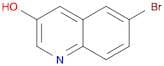
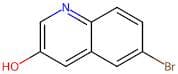
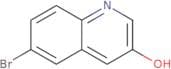
6-Bromo-3-quinolinol is an organic compound characterized by its quinoline structure, which consists of a fused benzene and pyridine ring. The presence of a bromine atom at the 6-position and a hydroxyl group at the 3-position contributes to its unique chemical properties. This compound typically appears as a solid and is known for its potential applications in medicinal chemistry, particularly in the development of pharmaceuticals due to its biological activity. It may exhibit antimicrobial, anti-inflammatory, or anticancer properties, making it of interest in drug discovery. The compound's solubility can vary depending on the solvent, and it may participate in various chemical reactions, including electrophilic substitutions and nucleophilic attacks, due to the reactivity of the bromine and hydroxyl groups. Safety data should be consulted for handling, as with many brominated compounds, it may pose health risks if not managed properly. Overall, 6-Bromo-3-quinolinol represents a valuable compound in the field of organic synthesis and medicinal chemistry.
Formula:C9H6BrNO
InChI:InChI=1S/C9H6BrNO/c10-7-1-2-9-6(3-7)4-8(12)5-11-9/h1-5,12H
InChI key:InChIKey=CURYXBCGKGDWCN-UHFFFAOYSA-N
SMILES:OC1=CC2=C(C=CC(Br)=C2)N=C1
Synonyms:- 3-Quinolinol, 6-Bromo-
- 6-Bromo-3-quinolinol
- 6-Bromo-3-hydroxyquinoline
Sort by
Purity (%)
0
100
|
0
|
50
|
90
|
95
|
100
Found 4 products.
6-Bromo-3-hydroxyquinoline
CAS:Formula:C9H6BrNOPurity:97%Color and Shape:SolidMolecular weight:224.05406-Bromoquinolin-3-ol
CAS:6-Bromoquinolin-3-ol is a reactive acceptor that can undergo electrophilic coupling reactions with electron-deficient olefins. It is used as an antioxidant and as a synthon for the synthesis of chalcones, dyes, and other compounds. 6-Bromoquinolin-3-ol has been used to synthesize the antioxidant flavanones, which are found in many fruits and vegetables. The compound also undergoes formylation (addition of formaldehyde), acylation (addition of an acid chloride), and bromination reactions to produce different derivatives.Formula:C9H6BrNOPurity:Min. 95%Molecular weight:224.05 g/mol