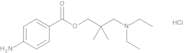
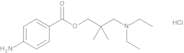
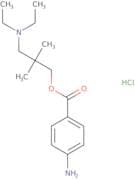
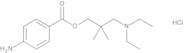
CAS 553-63-9
:1-Propanol,3-(diethylamino)-2,2-dimethyl-, 1-(4-aminobenzoate), hydrochloride (1:1)
- 1-Propanol,3-(diethylamino)-2,2-dimethyl-, 4-aminobenzoate (ester), monohydrochloride
- 1-Propanol, 3-(diethylamino)-2,2-dimethyl-, p-aminobenzoate (ester),monohydrochloride
- 1-Aminobenzoyl-2,2-dimethyl-3-diethylaminopropanolhydrochloride
- 3-Diethylamino-2,2-dimethylpropyl p-aminobenzoate hydrochloride
- Diethylaminoneopentyl alcohol hydrochloride p-aminobenzoate
- Dimethocaine hydrochloride
- Larocaine hydrochloride
- 1-Propanol,3-(diethylamino)-2,2-dimethyl-, 1-(4-aminobenzoate), hydrochloride
- Dimethocaine hcl
- Larocaine hcl
Dimethocaine Hydrochloride 1.0 mg/ml in Methanol (as free base)
CAS:Controlled ProductColor and Shape:Single SolutionDimethocaine Hydrochloride
CAS:Controlled ProductApplications A local anesthetic with stimulant properties. Studies have shown its potency to be about half that of Cocaine (C633500).
References Wppdward, J.J. et al.: Eur. J. Pharmacol., 277, 7 (1995); Rigon, A.R. et al.: Psychopharmacol., 127, 323 (1996); Wilcox, K.M. et al.: Synapse, 58, 220 (2005);Formula:C16H26N2O2·ClHColor and Shape:White To BeigeMolecular weight:314.853-Diethylamino-2,2-dimethylpropyl p-aminobenzoate hydrochloride
CAS:Controlled Product3-Diethylamino-2,2-dimethylpropyl p-aminobenzoate hydrochloride (3DAPBA) is a drug that belongs to the amide class. It has been shown to have significant effects on neuronal function in vivo, as well as on dopamine neurotransmission in vitro. 3DAPBA is also a substrate for uptake by the dopamine transporter and can inhibit locomotor activity in rats, suggesting it may be a potential therapeutic agent for the treatment of Parkinson's disease. 3DAPBA has been shown to be effective against cocaine addiction and can reduce angiogenic factors in vivo. The drug also interacts with other drugs, including synthetic cannabinoids and amphetamines, which are metabolized by CYP2B6 enzymes. These interactions may result in reduced efficacy of 3DAPBA therapy. In addition, 3DAPBA is excreted unchanged in urine samples and can be detected in human liver tissue; it also inhibits michael
Formula:C16H27ClN2O2Purity:Min. 95%Color and Shape:PowderMolecular weight:314.85 g/mol