CAS 553-97-9
:Methyl-1,4-benzoquinone
Description:
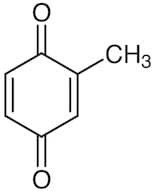
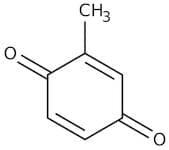
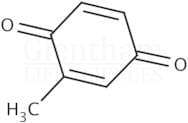
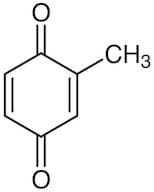
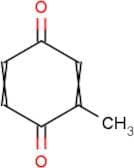
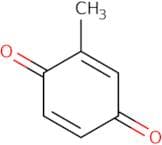
Methyl-1,4-benzoquinone, also known as 2-methyl-1,4-benzoquinone, is an organic compound with the molecular formula C7H6O2. It is characterized by a quinone structure, which features a six-membered aromatic ring with two carbonyl groups (C=O) at the 1 and 4 positions, along with a methyl group at the 2 position. This compound typically appears as a yellow to orange solid and is soluble in organic solvents such as ethanol and acetone. Methyl-1,4-benzoquinone is known for its reactivity, particularly in redox reactions, where it can act as an electron acceptor. It is often used in organic synthesis and as an intermediate in the production of various dyes and pharmaceuticals. Additionally, it exhibits antimicrobial properties and has been studied for its potential applications in biochemistry and medicine. Due to its reactive nature, handling this compound requires appropriate safety precautions to avoid exposure and ensure safe laboratory practices.
Formula:C7H6O2
InChI:InChI=1S/C7H6O2/c1-5-4-6(8)2-3-7(5)9/h2-4H,1H3
InChI key:InChIKey=VTWDKFNVVLAELH-UHFFFAOYSA-N
SMILES:CC=1C(=O)C=CC(=O)C1
Synonyms:- 2-Methyl-1,4-benzoquinone
- 2-Methyl-2,5-cyclohexadien-1,4-dione
- 2-Methyl-2,5-cyclohexadiene-1,4-dione
- 2-Methyl-p-benzoquinone
- 2-Methylbenzoquinone
- 2-Methylquinone
- Benzoquinone, 4-Methyl-
- Cresoquinone
- Methyl-1,4-benzoquinone
- Methyl-p-benzochinon
- Methyl-p-benzoquinone
- Methyl-p-quinone
- Metil-P-Benzoquinona
- Monomethyl-p-benzoquinone
- Nsc 405002
- p-Benzoquinone, 2-methyl-
- p-Benzoquinone, methyl-
- p-Toluquinone
- 2,5-Cyclohexadiene-1,4-dione, 2-methyl-
- Toluquinone
- See more synonyms
Sort by
Purity (%)
0
100
|
0
|
50
|
90
|
95
|
100
Found 10 products.
p-Toluquinone
CAS:Formula:C7H6O2Purity:>99.0%(GC)(T)Color and Shape:Light yellow to Amber to Dark green powder to crystalMolecular weight:122.12Methyl-p-benzoquinone, 98%
CAS:Methyl-p-benzoquinone imine is the products were the tetrahedral adducts. Synthesis of 2H-indazole-4,7-dione derivatives from3-phenylsydnone and p-toluquinone. A Michael addition of 2-methylcyclopentane-1,3-dione to various p-toluquinone imides exclusively afforded the sole products in a regiospeciFormula:C7H6O2Purity:98%Color and Shape:Crystalline powder, Yellow to brownMolecular weight:122.122,5-Cyclohexadiene-1,4-dione, 2-methyl-
CAS:Formula:C7H6O2Purity:97%Color and Shape:SolidMolecular weight:122.12132-Methylcyclohexa-2,5-diene-1,4-dione
CAS:2-Methylcyclohexa-2,5-diene-1,4-dione exhibits inhibitory activity against cancer cells such as A2780, HT-29, HL-60, and K562 (IC50 = 2.8–12.1 µM) and antibacterial activity against Bacillus subtilis.Formula:C7H6O2Purity:99.89% - 99.90%Color and Shape:SolidMolecular weight:122.12p-Toluquinone
CAS:Formula:C7H6O2Purity:>98.0%(GC)(T)Color and Shape:Light yellow to Brown powder to crystalMolecular weight:122.12Methyl-p-benzoQuinone
CAS:Methyl-p-benzoquinone is a chemical compound that is used in wastewater treatment. It has been shown to inhibit the activity of enzymes involved in oxidative injury, such as superoxide dismutase and catalase. Methyl-p-benzoquinone also inhibits the oxidation of sulfhydryl groups by forming stable complexes with proteins. The redox cycle of this compound is essential for its function. Methyl-p-benzoquinone has been shown to have an inhibitory effect on cellular respiration, which may be due to its ability to reduce proton levels and prevent the formation of reactive oxygen species (ROS). This compound also has anti-inflammatory properties that may be due to its role in the regulation of gene expression and cell proliferation.Formula:C7H6O2Purity:Min. 95%Color and Shape:PowderMolecular weight:122.12 g/molp-Toluquinone
CAS:p-Toluquinone is a reactive substance that is used in organic synthesis as a building block and an intermediate. It can be used to synthesize various types of compounds, such as fine chemicals and pharmaceuticals. This chemical is also used as a reagent for the production of other substances. p-Toluquinone has a CAS number of 553-97-9 and is classified under the category of useful scaffolds, high quality research chemicals, and speciality chemicals.Formula:C7H6O2Purity:Min. 99.0 Area-%Molecular weight:122.12 g/mol