CAS 55942-40-0
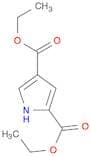
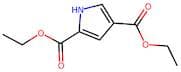
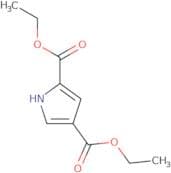
:2,4-diethyl 1H-pyrrole-2,4-dicarboxylate
Description:
2,4-Diethyl-1H-pyrrole-2,4-dicarboxylate is an organic compound characterized by its pyrrole ring structure, which is a five-membered aromatic heterocycle containing nitrogen. This compound features two ethyl groups attached to the 2 and 4 positions of the pyrrole ring, contributing to its hydrophobic properties and potentially influencing its reactivity and solubility. The presence of two carboxylate ester groups at the 2 and 4 positions enhances its reactivity, making it useful in various chemical syntheses and applications. Typically, compounds like this exhibit moderate to high stability under standard conditions but may undergo hydrolysis in the presence of strong acids or bases. Its molecular structure allows for potential applications in pharmaceuticals, agrochemicals, or as intermediates in organic synthesis. Additionally, the compound's physical properties, such as melting point, boiling point, and solubility, would depend on the specific conditions and purity of the sample. Safety data should be consulted for handling and storage, as with any chemical substance.
Sort by
Purity (%)
0
100
|
0
|
50
|
90
|
95
|
100
Found 4 products.
Diethyl 1H-pyrrole-2,4-dicarboxylate
CAS:Formula:C10H13NO4Purity:97%Color and Shape:SolidMolecular weight:211.2145Diethyl 1H-pyrrole-2,4-dicarboxylate
CAS:Diethyl 1H-pyrrole-2,4-dicarboxylatePurity:98%Molecular weight:211.21g/molDIETHYL 1H-PYRROLE-2,4-DICARBOXYLATE
CAS:Formula:C10H13NO4Purity:98%Color and Shape:SolidMolecular weight:211.217diethyl 1h-pyrrole-2,4-dicarboxylate
CAS:Diethyl 1H-pyrrole-2,4-dicarboxylate is a reactive and nucleophilic substituent that is used in organic synthesis. It has been shown to undergo substitution reactions with various functional groups, such as alcohols and amines. This compound can also be conjugated with other molecules, such as amino acids. Diethyl 1H-pyrrole-2,4-dicarboxylate is synthesized from pyrrole and diethyl malonate. It has been shown to have optimal activity against caco-2 cells when substituted for the 2,4-dimethoxybenzaldehyde component of the substrate.Formula:C10H13NO4Purity:Min. 95%Molecular weight:211.22 g/mol