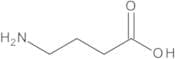
CAS 56-12-2
:γ-Aminobutyric acid
Description:
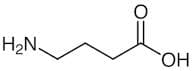
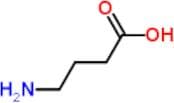
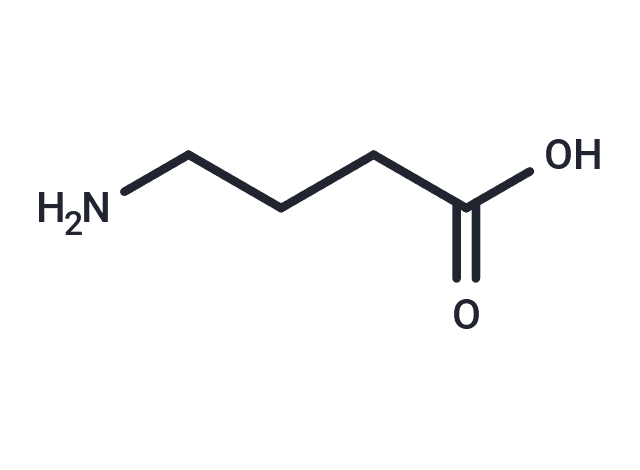
γ-Aminobutyric acid, commonly known as GABA, is a non-proteinogenic amino acid that serves as a key neurotransmitter in the central nervous system. It is characterized by its four-carbon backbone, with an amino group (-NH2) and a carboxylic acid group (-COOH) attached to the terminal carbon. GABA plays a crucial role in inhibiting neuronal excitability throughout the nervous system, thus contributing to the regulation of muscle tone and the modulation of anxiety and stress responses. It is a colorless, odorless solid that is soluble in water, making it bioavailable for various physiological functions. GABA is synthesized in the brain from glutamate, another amino acid, through the action of the enzyme glutamic acid decarboxylase. Its therapeutic applications include the treatment of anxiety disorders, epilepsy, and other neurological conditions. Additionally, GABA is often studied for its potential effects on sleep regulation and cognitive function. As a dietary supplement, it is marketed for its purported calming effects, although its efficacy when taken orally remains a topic of ongoing research.
Formula:C4H9NO2
InChI:InChI=1S/C4H9NO2/c5-3-1-2-4(6)7/h1-3,5H2,(H,6,7)
InChI key:InChIKey=BTCSSZJGUNDROE-UHFFFAOYSA-N
SMILES:C(C(O)=O)CCN
Synonyms:- 3-Carboxypropylamine
- 4-Amino Butyric Acid
- 4-Amino-N-Butyric Acid
- 4-Aminobutanoic Acid
- 4-Aminobuttersaure
- Acide 4-aminobutyrique
- Acido 4-Aminobutirico
- Alpha-Aminobutanoic Acid
- Aminalon
- Aminobutyric Acid, 4-
- Aminobutyric-4 Acid
- Aurora Ka-1053
- Butanoic acid, 4-amino-
- Butyric acid, 4-amino-
- Gaba
- Gaballon
- Gamarex
- Gamma Amino Butyric Acid
- Gamma-Aminobutyric Acid
- Gammalon
- Gammalone
- Gammar
- Gammasol
- H-4-Aminobutyric Acid
- Lacto Gaban
- Mielogen
- Mielomade
- Nsc 27418
- Nsc 32044
- Nsc 45460
- Nsc 51295
- Oryza GABA Extract HC 90
- Pharma GABA 30L
- Pharma-GABA 20S
- Pharmagaba
- Pharmagaba 20
- Pharmagaba 20D
- Piperidic Acid
- Piperidinic Acid
- Γ-Aminobutyric Acid
- γ-Aminobutanoic acid
- γ-Aminobutryic acid
- See more synonyms
Sort by
Purity (%)
0
100
|
0
|
50
|
90
|
95
|
100
Found 19 products.
4-Aminobutyric Acid
CAS:Formula:C4H9NO2Purity:>99.0%(T)Color and Shape:White powder to crystalineMolecular weight:103.124-Aminobutyric acid, 99+%
CAS:This Thermo Scientific Chemicals brand product was originally part of the Alfa Aesar product portfolio. Some documentation and label information may refer to the legacy brand. The original Alfa Aesar product / item code or SKU reference has not changed as a part of the brand transition to Thermo SciFormula:C4H9NO2Purity:99+%Color and Shape:Powder, WhiteMolecular weight:103.124-Aminobutyric acid, 97%
CAS:In the production of polymers, food additives, and pharmaceuticals. Acrylic acid and methacrylic acids are well known precursors of polymers. This Thermo Scientific Chemicals brand product was originally part of the Alfa Aesar product portfolio. Some documentation and label information may refer toFormula:C4H9NO2Purity:97%Color and Shape:White, PowderMolecular weight:103.12γ-Aminobutyric Acid
CAS:Amino-acids and their esters other than those containing more than one kind of oxygen function, excluding aromatic amino-acids, nesoiFormula:C4H9NO2Color and Shape:White Crystalline PowderMolecular weight:103.06333Ref: IN-DA003KR6
10g20.00€25g22.00€100g24.00€50g28.00€250g38.00€500g47.00€1000g64.00€1kg66.00€5kg192.00€10kg256.00€γ-Aminobutyric acid
CAS:γ-Aminobutyric acid (4-Aminobutyric acid) is the most common inhibitory neurotransmitter in the central nervous system.Formula:C4H9NO2Purity:99.95%Color and Shape:White SolidMolecular weight:103.12Vigabatrin EP Impurity D
CAS:Formula:C4H9NO2Color and Shape:White To Off-White SolidMolecular weight:103.124-Aminobutyric acid
CAS:Formula:C4H9NO2Purity:≥ 99.0%Color and Shape:White crystals or crystalline powderMolecular weight:103.124-Aminobutanoic acid
CAS:4-Aminobutanoic acidFormula:C4H9NO2Purity:97%Color and Shape: white powderMolecular weight:103.12g/molγ-Aminobutyric Acid Tartrate
CAS:Formula:C4H9NO2·C4H6O6Color and Shape:White To Off-White SolidMolecular weight:103.12 150.09γ-Aminobutyric acid
CAS:Amino acidFormula:C4H9NO2Purity:≥ 98.0 % (HPLC)Color and Shape:PowderMolecular weight:103.12γ-Aminobutyric Acid
CAS:Applications An important inhibitory neurotransmitter. The foods contain γ-aminobutyric acid (GABA) at an amount that shows immediate effect of suppressing autonomic nerve activity related to blood pressure increase. Reacts with isothiocyanates to produce thioureas which have antifungal activity.
References Lowry, O., et al.: J. Biol. Chem., 193, 265 (1951), Gerlach, M., et al.: Brain Res., 741, 142 (1996), Choi, D., et al.: J Neurobiol 1992, 23, 1261Formula:C4H9NO2Color and Shape:NeatMolecular weight:103.124-Aminobutyric Acid extrapure CHR, 99%
CAS:Formula:C4H9NO2Purity:min. 99%Color and Shape:White to off-white, Crystalline powder, Clear, Colourless to Pale yellowMolecular weight:103.124-Aminobutyric acid
CAS:Formula:C4H9NO2Purity:98%Color and Shape:Crystalline Powder,PowderMolecular weight:103.121Gamma-Aminobutyric acid
CAS:Gamma-aminobutyric acid (GABA) is a neurotransmitter that inhibits the transmission of nerve impulses in the brain. GABA binds to specific receptors and blocks voltage-dependent calcium channels, which are ion channels that allow the passage of calcium ions into cells. GABA also has a number of other functions, including biochemical properties, its role in brain function and drug interactions. The GABA receptor is found on neurons and is subject to modulation by drugs that interact with GABA receptors. In addition, GABA can react with water vapor to produce hydrogen bonding interactions. This reaction is used in electrochemical impedance spectroscopy as an analytical tool for determining the concentration of free water in a sample.Formula:C4H9NO2Purity:Min. 98.0%Color and Shape:White PowderMolecular weight:103.12 g/mol