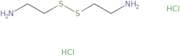
CAS 56-17-7
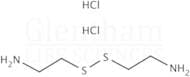
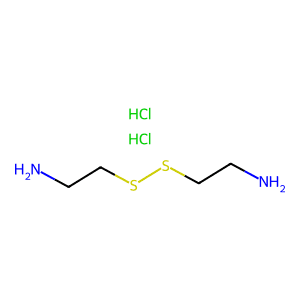
:Cystamine dihydrochloride
- 2,2'-Disulfanediyldiethanamine Dihydrochloride
- 2,2'-Disulfanediyldiethanaminium
- 2,2'-Dithiobis(ethylamine)dihydrochloride
- 2,2-Dithiodi(Ethylammonium) Dichloride
- 2-(2-Aminoethyldisulfanyl)ethanamine dihydrochloride
- Bis(2-aminoethyl) disulphide dihydrochloride
- Bis-(2-aminoethyl)disulfide dihydrochloride
- Cystamine dichlorohydrate
- Cystamine hydrochloride
- Cysteamine Dihydrochloride
- Di(2-Aminoethyl) Disulphide Dihydrochloride
- Ethanamine, 2,2′-dithiobis-, dihydrochloride
- Ethanamine, 2,2′-dithiobis-, hydrochloride (1:2)
- Ethylamine, 2,2′-dithiobis-, dihydrochloride
- Wr 352
- See more synonyms
Cystamine Dihydrochloride
CAS:Formula:C4H12N2S2·2HClPurity:>97.0%(N)Color and Shape:White to Almost white powder to crystalMolecular weight:225.19Cystamine dihydrochloride, 97+%
CAS:Cystamine dihydrochloride acts as an anti-infective agent, which is used in the treatment of urinary tract infections. It is also used as a radiation-protective agent that interferes with sulfhydryl enzymes. Further, it serves as a heparin antagonist and sulfhydryl modifying reagent. In addition toFormula:C4H14Cl2N2S2Purity:97+%Color and Shape:Powder, White to creamMolecular weight:225.192-[(2-aminoethyl)disulfanyl]ethan-1-amine dihydrochloride
CAS:Formula:C4H14Cl2N2S2Purity:97%Color and Shape:SolidMolecular weight:225.2034Cystamine dihydrochloride
CAS:Formula:C4H12N2S2·2HClPurity:97.0 - 103.0 %Color and Shape:White to yellow or tan powder or crystalsMolecular weight:225.20Cystamine Dihydrochloride, 10mM (in DMSO)
CAS:Cystamine Dihydrochloride, 10mM (in DMSO)Purity:≥98%Molecular weight:225.19g/molCystamine-d8 2HCl(2,2'-Diaminodiethyl Disulfide 2HCl)
CAS:Formula:H2NCD2CD2SSCD2CD2NH•2HClPurity:99 atom % DMolecular weight:233.24Cystamine dihydrochloride
CAS:Cystamine dihydrochloride is a radiation-protective agent. It also protects against carbon tetrachloride liver damage.Formula:C4H14Cl2N2S2Purity:98.91% - 99.81%Color and Shape:White PowderMolecular weight:225.19Cystamine Dihydrochloride
CAS:Applications Cystamine dihydrochloride is the dihydrochloride salt of Cystamine, a neuroprotective drug that works by inhibiting transglutaminase activity in the body. Cystamine has also exhibited suppressive effects against HIV replication in infected human cells.
References Bergamini, A., et al.: J. Clin. Invest., 93, 2251 (1994); Fox, J., et al.: J. Neuro., 91, 413 (2004); Jeitner, T., et al.: Biochem. Pharm., 69, 961 (2005)Formula:C4H12N2S2·2ClHColor and Shape:NeatMolecular weight:225.2Cystamine dihydrochloride
CAS:Cystamine dihydrochloride is a cysteamine prodrug that is converted to cysteamine in the body. Cysteamine is an antioxidant that has been shown to be effective in treating oxidative injury and increasing neuronal survival. The oxidation of cysteamine also depends on the presence of calcium, pantothenate, and metal ions such as zinc or copper. This process can be monitored by measuring the rate constant or the concentration of metal ions. Cystamine dihydrochloride is used to treat bowel disease, but it can also be used as a pharmacological agent. It has been shown to have antibacterial properties against Escherichia coli and Staphylococcus aureus. Cystamine dihydrochloride has not yet been found to cause any adverse effects in humans at doses up to 10 g per day.
Formula:C4H12N2S2•2HClPurity:(Titration) Min 99%Color and Shape:White PowderMolecular weight:225.2 g/molCystamine dihydrochloride
CAS:Formula:C4H14Cl2N2S2Purity:95%Color and Shape:Solid, Crystalline PowderMolecular weight:225.19


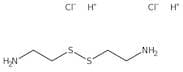

![2-[(2-aminoethyl)disulfanyl]ethan-1-amine dihydrochloride](/_next/image/?url=https%3A%2Fstatic.cymitquimica.com%2Fproducts%2FIN%2Fthumb%2FDA0034OA.jpg&w=3840&q=75)