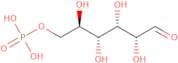
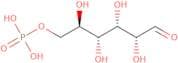
CAS 56-73-5
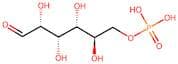
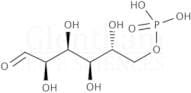
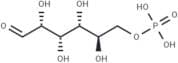
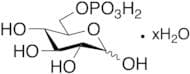
:Glucose 6-phosphate
- 6-Dihidrogenofosfato De Glucosa
- 6-Dihydrogenophosphate de glucose
- 6-O-phosphono-D-glucopyranose
- 6-O-phosphono-alpha-D-glucopyranose
- 6-O-phosphonohexopyranose
- 6-O-phosphonohexose
- <span class="text-smallcaps">D</span>-Glucose 6-(dihydrogen phosphate)
- <span class="text-smallcaps">D</span>-Glucose 6-phosphate
- D-Glucose 6-phosphate
- D-Glucose, 6-(dihydrogen phosphate)
- Gluconate 6-phosphate
- Glucose 6-(Dihydrogen Phosphate)
- Glucose 6-phosphate
- Glucose-6-(dihydrogenphosphat)
- See more synonyms
D-Glucose 6-phosphate
CAS:D-Glucose 6-phosphate (G6P) by hexose kinase, glycolysis, gluconeogenesis, and the pentose phosphate. G6P a substrate for glucose 6-phosphatase and H6PDH.Formula:C6H13O9PPurity:260 mg/ml - 260 mg/mlColor and Shape:SolidMolecular weight:260.14Ref: TM-T19263
10mg (1M*38μL in Water)37.00€25mg (1M*96μL in Water)49.00€50mg (1M*192μL in Water)73.00€100mg (1M*384μL in Water)105.00€D-Glucose 6-Phosphate Solution (1M in H2O)
CAS:Controlled ProductApplications D-Glucose 6-phosphate solution is a sarcoendoplasmic reticulum calcium ATPase activity inhibitor.
Not a dangerous good if item is equal to or less than 1g/ml and there is less than 100g/ml in the package
References Okubo, M. et al.: Metab., 37, 1171 (1988); Henriksen, J.E. et al.: Metab. Clin. Exp., 46, 598 (1996); Oyama, J. et al.: Enndocrinol., 80, 707 (1967); Newsholme, E.A. et al.: Biochem. J., 104, 47P (1967);Formula:C6H13O9PColor and Shape:According To Product Specification FluidMolecular weight:260.14D-Glucose-6-phosphate - 1M, in H2O
CAS:Glucose 6-phosphatase substrateFormula:C6H13O9PPurity:Min. 95%Color and Shape:Colorless Clear LiquidMolecular weight:260.14 g/molD-Glucose 6-phosphate - Powder
CAS:D-glucose 6-phosphate is an intermediate in the hexose monophosphate shunt pathway. It is formed by the enzyme phosphoglucomutase from D-glucose 1-phosphate and UTP. D-glucose 6-phosphate is also an important intermediate in glycolysis. The conversion of D-glucose 6-phosphate to glucose 1,6-bisphosphate occurs through a series of reactions catalyzed by enzymes that are sensitive to inhibition by magnesium ions. These reactions include the phosphofructokinase, hexokinase, and pyruvate kinase reactions. The accumulation of glucose 6-phosphate leads to increased levels of lactate production and decreased levels of ATP production. This may be due to its ability to inhibit monoamine reuptake, which would lead to decreased synthesis of dopamine and serotonin.
Formula:C6H13O9PPurity:Min. 95%Color and Shape:PowderMolecular weight:260.14 g/molRef: 3D-FD158897
Discontinued product