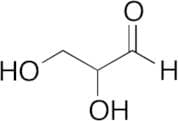
CAS 56-82-6
:(±)-Glyceraldehyde
Description:
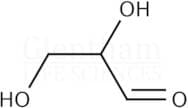
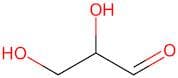
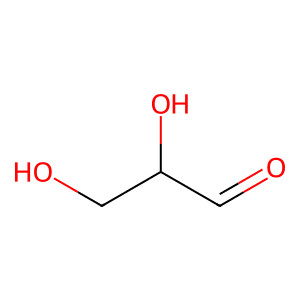
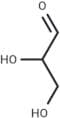
(±)-Glyceraldehyde, with the CAS number 56-82-6, is a simple sugar and an important intermediate in various metabolic pathways. It is a triose, specifically an aldose, characterized by its three carbon atoms and an aldehyde functional group. This compound exists in two enantiomeric forms, D-glyceraldehyde and L-glyceraldehyde, which are mirror images of each other. In its pure form, (±)-glyceraldehyde is a colorless, hygroscopic liquid that is soluble in water due to its ability to form hydrogen bonds. It has a sweet taste and is involved in the synthesis of other carbohydrates and biomolecules. The compound plays a crucial role in glycolysis and is also used in various biochemical applications, including as a building block in organic synthesis. Its reactivity is influenced by the aldehyde group, making it susceptible to oxidation and reduction reactions. Overall, (±)-glyceraldehyde is significant in both biological systems and industrial applications.
Formula:C3H6O3
InChI:InChI=1S/C3H6O3/c4-1-3(6)2-5/h1,3,5-6H,2H2
InChI key:InChIKey=MNQZXJOMYWMBOU-UHFFFAOYSA-N
SMILES:C(CO)(C=O)O
Synonyms:- (.+-.)-Glyceraldehyde
- 2,3-Dihydroxypropanal
- 2,3-Dihydroxypropionaldehyde
- <span class="text-smallcaps">DL</span>-Glyceraldehyde
- <span class="text-smallcaps">DL</span>-Glyceric aldehyde
- D,L-Glycerinaldehyd
- DL-Glyceraldehyd
- DL-Glyceric aldehyde
- DL-gliceraldehido
- Glyceraldehyde, <span class="text-smallcaps">DL</span>-
- Glyceraldehyde, DL-
- Glyceric aldehyde
- Glycerinaldehyde
- Glycerose
- Nsc 67934
- Propanal, 2,3-dihydroxy-
- α,β-Dihydroxypropionaldehyde
- See more synonyms
Sort by
Purity (%)
0
100
|
0
|
50
|
90
|
95
|
100
Found 8 products.
DL-Glyceraldehyde
CAS:DL-Glyceraldehyde, produced by enzyme action on glycerol, can be cytotoxic and mutagenic, affecting proteins and DNA, and inducing ROS.Formula:C3H6O3Purity:≥90.0%Color and Shape:SolidMolecular weight:90.08DL-Glyceraldehyde
CAS:Glyceraldehyde is a monosaccharide that is an important intermediate in the glycolytic pathway. It is also classified as a hydroxyl group donor and has been shown to have cytotoxic effects on mammalian cells. Glyceraldehyde has been implicated in many biological processes, including fatty acid synthesis and dinucleotide phosphate synthesis. This molecule has been shown to bind to proteins through its hydroxyl groups, which are found on its carbonyl carbon atoms. The enzyme cytosolic protein kinase (PK) has been shown to phosphorylate glyceraldehyde, which may be involved in transcriptional regulation. In addition, glyceraldehyde may be involved in human serum glucose levels and plant metabolism.Formula:C3H6O3Purity:90%MinColor and Shape:PowderMolecular weight:90.08 g/mol