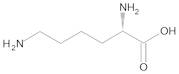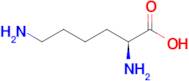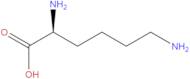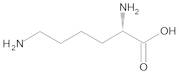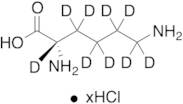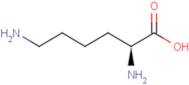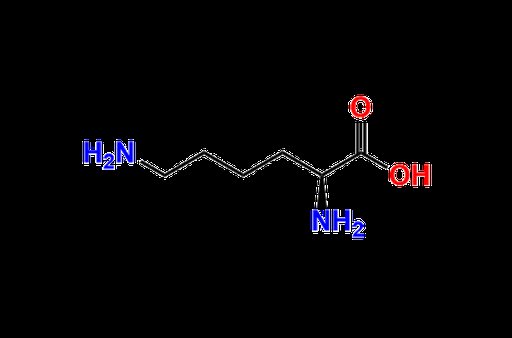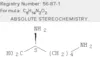
CAS 56-87-1
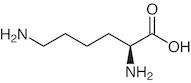
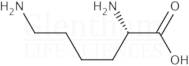
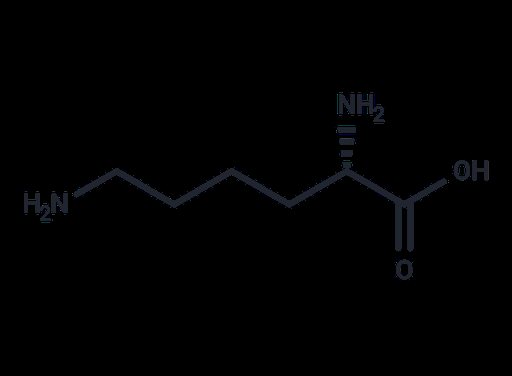
:L-Lysine
Description:
L-Lysine, with the CAS number 56-87-1, is an essential amino acid that plays a crucial role in protein synthesis and various metabolic processes. It is classified as a basic amino acid due to its positively charged side chain at physiological pH, which contributes to its solubility in water. L-Lysine is typically found in animal proteins and is vital for growth, tissue repair, and the production of hormones and enzymes. It is also involved in the synthesis of collagen, which is important for skin and connective tissue health. In addition to its biological functions, L-Lysine is often used as a dietary supplement to support immune function and may help in the management of herpes simplex virus outbreaks. The substance is generally recognized as safe when consumed in appropriate amounts, although excessive intake can lead to gastrointestinal discomfort. L-Lysine is available in various forms, including powders and capsules, and is commonly included in protein-rich foods such as meat, dairy, and legumes.
Formula:C6H14N2O2
InChI:InChI=1/C6H14N2O2/c7-4-2-1-3-5(8)6(9)10/h5H,1-4,7-8H2,(H,9,10)/t5-/m0/s1
InChI key:InChIKey=KDXKERNSBIXSRK-YFKPBYRVSA-N
SMILES:[C@H](CCCCN)(C(O)=O)N
Synonyms:- (+)-S-Lysine
- (S)-2,6-Diaminohexanoic acid
- (S)-α,ε-Diaminocaproic acid
- 114: PN: WO2021061872 SEQID: 114 claimed protein
- 2,6-Diaminohexanoic acid
- 38: PN: WO2020027640 SEQID: 101 claimed protein
- <span class="text-smallcaps">L</span>-(+)-Lysine
- <span class="text-smallcaps">L</span>-2,6-Diaminocaproic acid
- <span class="text-smallcaps">L</span>-Lys
- <span class="text-smallcaps">L</span>-Norleucine, 6-amino-
- Aminutrin
- Aminutrin, 6-amino-
- Biolys
- Hexanoic acid, 2,6-diamino-, (S)-
- L-2,6-Diaminocaproic acid
- L-Lys
- L-Lysin
- L-Norleucine, 6-amino-
- L-lisina
- Llb 50
- Lysin
- Lysine
- Lysine acid
- Lysine, <span class="text-smallcaps">L</span>-
- Lysine, L-
- Malandil
- h-Lys-oh
- α-Lysine
- L-Lysine Base
- L-Lysine
- 2,6-DIAMINOCAPROIC ACID
- alpha,epsilon-diaminocaproicacid
- (S)-alpha,epsilon-Diaminocaproic acid
- 2,6-diaminohexanoicacid
- FEMA 3847
- alpha,epsilon-Diaminocaproic acid
- alpha-Lysine
- (S)-2,6-DIAMINOCAPROIC ACID
- See more synonyms
Filter by
Purity percentage
0
100
|
0
|
50
|
90
|
95
|
100
- Lower prices
- Higher prices
- Lower purities
- Higher purities
- Faster estimated delivery
L-(+)-Lysine
CAS:Formula:C6H14N2O2Purity:>97.0%(T)Color and Shape:White to Light yellow powder to crystalMolecular weight:146.19L-Lysine, 98%
CAS:L-Lysine is an essential amino acid used in human nutrition. It plays a vital role in calcium absorption, building muscle protein and recovering from surgery or sports injuries. It is used for the treatment of herpes infections and cold sores. Its derivatives lysine acetylsalicylate is utilized to tFormula:C6H14N2O2Purity:98%Color and Shape:White to pale yellow, Crystalline powder or powderMolecular weight:146.19L-Lysine solution, 50% in H2O
CAS:L-Lysine solution, 50% in H2OFormula:C6H14N2O2Color and Shape:LiquidMolecular weight:146.188L-Lysine
CAS:L-LysineFormula:C6H14N2O2Purity:≥95%Color and Shape:Pale yellow SolidMolecular weight:146.18756L-Lysine
CAS:Formula:C6H14N2O2Purity:≥ 98.0% (anhydrous)Color and Shape:White to yellow crystalline powderMolecular weight:146.19L-Lysine (Standard)
CAS:L-Lysine (Standard) is an essential amino acid for humans; it enhances calcium absorption, reduces the risk of diabetes-related diseases.Formula:C6H14N2O2Molecular weight:146.19L-Lysine
CAS:Controlled ProductApplications L-Lysine is an essential amino acid for human development. Lysine residues are useful in many cellular processes, due to their ability to accept a wide variety of post-translational modifications.
References Tosha, L. et. al.: Biochem. J. 435, 509 (2011);Formula:C6H14N2O2Color and Shape:NeatMolecular weight:146.19L-Lysine-2,3,3,4,4,5,5,6,6-d9 Hydrochloride
CAS:Controlled ProductFormula:C6H5D9N2O2•x(HCl)Color and Shape:NeatMolecular weight:155.243646L-Lysine
CAS:L-Lysine (Aminutrin) is one of nine essential amino acids in humans required for growth and tissue repair, Lysine is supplied by many foods.Formula:C6H14N2O2Purity:98.96% - 99.98%Color and Shape:SolidMolecular weight:146.19L-Lysine (free base) Anhydrous for cell culture, 98%, Endotoxin (BET) 0.05EU/mg
CAS:Formula:C6H14N2O2Purity:min.98%Color and Shape:White to pale yellow, Crystalline powder, Clear, Colourless to pale yellowMolecular weight:146.20L-Lysine (free base) Anhydrous extrapure, 98%
CAS:Formula:C6H14N2O2Purity:min. 98%Color and Shape:White to pale yellow, Crystalline powder, Clear, Colourless to pale yellowMolecular weight:146.20L-Lysine (free base) Anhydrous for tissue culture, 98%
CAS:Formula:C6H14N2O2Purity:min.98%Color and Shape:White to pale yellow, Crystalline powder, Clear, Colourless to pale yellowMolecular weight:146.20