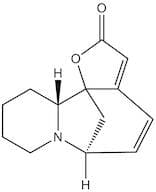
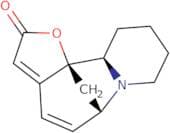
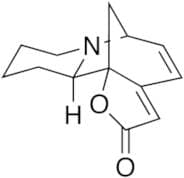
CAS 5610-40-2
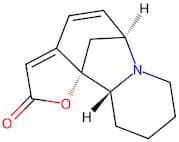
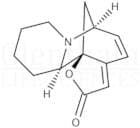
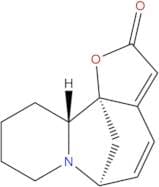
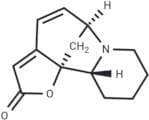
:(-)-Securinine
Description:
(-)-Securinine is a naturally occurring alkaloid derived from the plant Securinega suffruticosa, which belongs to the family Euphorbiaceae. It is characterized by its complex bicyclic structure, featuring a pyridine and a piperidine ring. This compound exhibits a range of biological activities, including neuroprotective effects, and has been studied for its potential therapeutic applications in neurological disorders. (-)-Securinine is known to interact with various neurotransmitter systems, particularly influencing GABAergic and glutamatergic pathways, which may contribute to its effects on the central nervous system. The substance is typically found in a crystalline form and is soluble in organic solvents. Its stereochemistry is significant, as the (-) enantiomer is the biologically active form. Due to its pharmacological properties, (-)-Securinine has garnered interest in medicinal chemistry and pharmacology, although further research is needed to fully elucidate its mechanisms of action and potential clinical applications.
Formula:C13H15NO2
InChI:InChI=1/C13H15NO2/c15-12-7-9-4-5-10-8-13(9,16-12)11-3-1-2-6-14(10)11/h4-5,7,10-11H,1-3,6,8H2/t10-,11-,13?/m1/s1
InChI key:InChIKey=SWZMSZQQJRKFBP-WZRBSPASSA-N
SMILES:O=C1O[C@@]23[C@@]4(N([C@@](C2)(C=CC3=C1)[H])CCCC4)[H]
Synonyms:- (11aR,11bS)-9,10,11,11a-tetrahydro-8H-6,11b-methanofuro[2,3-c]pyrido[1,2-a]azepin-2(6H)-one
- (6R,11aS,11bR)-9,10,11,11a-tetrahydro-8H-6,11b-methanofuro[2,3-c]pyrido[1,2-a]azepin-2(6H)-one
- (6S,11aR)-9,10,11,11a-tetrahydro-8H-6,11b-methanofuro[2,3-c]pyrido[1,2-a]azepin-2(6H)-one
- (6S,11aR,11bS)-9,10,11,11a-tetrahydro-8H-6,11b-methanofuro[2,3-c]pyrido[1,2-a]azepin-2(6H)-one
- 6,10-Methanopyrido[1,2-a]azepine-Δ<sup>9(6</sup><sup>H</sup><sup>),α</sup>-acetic acid, 1,2,3,4,10,10a-hexahydro-10-hydroxy-, γ-lactone
- 8H-6,11b-Methanofuro[2,3-c]pyrido[1,2-a]azepin-2(6H)-one, 9,10,11,11a-tetrahydro-, (6S,11aR,11bS)-
- 9,10,11,11a-tetrahydro-8H-6,11b-methanofuro[2,3-c]pyrido[1,2-a]azepin-2(6H)-one
- NSC 107413
- Securinan-11-one
- Securinin
- l-Securinine
- 6,10-Methanopyrido[1,2-a]azepine-Δ9(6H),α-acetic acid, 1,2,3,4,10,10a-hexahydro-10-hydroxy-, γ-lactone
- Securinine, (-)-
- Securinine
- 1,2,3,4,10,10a-Hexahydro-10-hydroxy-
- SECURININE(RG)
- Securinan-11-on
- SECURAN-11-ONE
- (2β,7S,9S)-Securinan-11-one
- See more synonyms
Sort by
Purity (%)
0
100
|
0
|
50
|
90
|
95
|
100
Found 10 products.
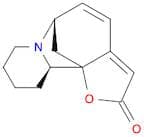
(6S,11Ar,11Bs)-9,10,11,11A-Tetrahydro-8H-6,11B-Methanofuro[2,3-C]Pyrido[1,2-A]Azepin-2(6H)-One
CAS:(6S,11Ar,11Bs)-9,10,11,11A-Tetrahydro-8H-6,11B-Methanofuro[2,3-C]Pyrido[1,2-A]Azepin-2(6H)-OnePurity:95%Molecular weight:217.26g/molSecurinine
CAS:Securinine, a GABAA receptor antagonist, enhances macrophage clearance of phase II C. burnetii: comparison with TLR agonists. It is alsoia promising new monocytic differentiation inducing agent for Acute Myeloid Leukemia (AML). Securinine shows antifungal activity against some plant pathogenic fungi.Formula:C13H15NO2Purity:95%~99%Molecular weight:217.268(-)-Securinine
CAS:(-)-Securinine (Securinine) is plant-derived alkaloid and also a GABAA receptor antagonist.Formula:C13H15NO2Purity:99.58% - 99.87%Color and Shape:SolidMolecular weight:217.26Securinine
CAS:Securinine is an alkaloid compound, which is naturally derived from the plant Securinega suffruticosa. This alkaloid is known for its diverse biological activities, primarily attributed to its interaction with neurotransmitter systems. The mode of action of securinine involves modulation of the central nervous system, where it acts as a GABA receptor antagonist. By inhibiting the action of gamma-aminobutyric acid, securinine can influence neuronal excitability and has been studied for its neurostimulant properties.Formula:C13H15NO2Purity:Min. 95%Molecular weight:217.26 g/molSecurinine
CAS:Controlled ProductApplications Extracted from leaves and roots of Securinega suffruticosa Rehder. The most widely studied of these alkaloids, Securinine, is a specific GABA receptor antagonist and has been found to have significant in vivo CNS activity.
References Friess, S.L., et al.: Toxicol. Appl. Pharmacol., 3, 347 (1961)Formula:C13H15NO2Color and Shape:NeatMolecular weight:217.26

![(6S,11Ar,11Bs)-9,10,11,11A-Tetrahydro-8H-6,11B-Methanofuro[2,3-C]Pyrido[1,2-A]Azepin-2(6H)-One](/_next/image/?url=https%3A%2Fstatic.cymitquimica.com%2Fproducts%2F54%2Fthumb%2FOR1024101.jpg&w=3840&q=75)