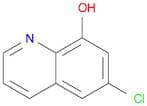
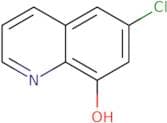
CAS 5622-06-0
:8-Quinolinol, 6-chloro-
Description:
8-Quinolinol, 6-chloro- is an organic compound characterized by its quinoline structure, which consists of a fused benzene and pyridine ring. The presence of a chlorine atom at the 6-position of the quinoline ring distinguishes it from other derivatives. This compound is typically a pale yellow to brown solid and is known for its chelating properties, allowing it to form stable complexes with metal ions. It is often used in various applications, including as a reagent in analytical chemistry and as a potential antimicrobial agent. The compound exhibits moderate solubility in organic solvents and limited solubility in water, which is common for many quinoline derivatives. Additionally, it may possess biological activity, making it of interest in medicinal chemistry. Safety considerations should be taken into account, as it may have toxicological effects, and proper handling procedures should be followed. Overall, 8-Quinolinol, 6-chloro- is a versatile compound with significant relevance in both industrial and research settings.
Formula:C9H6ClNO
Sort by
Purity (%)
0
100
|
0
|
50
|
90
|
95
|
100
Found 3 products.
8-Quinolinol, 6-chloro-
CAS:Formula:C9H6ClNOPurity:95%Color and Shape:SolidMolecular weight:179.603040000000056-chloroquinolin-8-ol
CAS:6-chloroquinolin-8-ol is a compound that has been found to have fungitoxic properties. It has been shown to inhibit the growth of fungi in vitro and has also been shown to be effective against Trichophyton mentagrophytes. 6-chloroquinolin-8-ol inhibits fungal growth by binding to the DNA of the fungus, preventing its replication. This compound is structurally similar to 5-chloro-8-hydroxyquinoline, which can also inhibit fungal growth. 6-chloroquinolin-8-ol yields a yellow solid that melts at 243°C and decomposes at 478°C. The molecule is also an analog of 8-hydroxyquinoline, which is a chlorine substituted derivative of quinoline.Formula:C9H6ClNOPurity:Min. 95%Molecular weight:179.6 g/mol