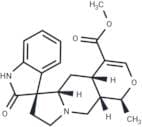
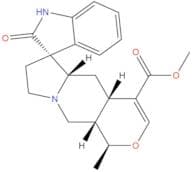
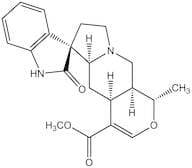
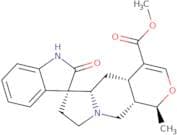
CAS 5629-60-7
:Pteropodine
Description:
Pteropodine, with the CAS number 5629-60-7, is an alkaloid compound primarily derived from certain plant species, particularly those in the family of Apocynaceae. This substance is characterized by its complex molecular structure, which includes a bicyclic framework. Pteropodine exhibits notable biological activity, including potential anti-inflammatory and analgesic properties, making it of interest in pharmacological research. Its solubility is typically moderate in organic solvents, and it may display varying degrees of stability under different environmental conditions. The compound's interactions with biological systems are still being studied, and its potential therapeutic applications are a subject of ongoing investigation. As with many alkaloids, pteropodine may also exhibit toxicity at certain concentrations, necessitating careful handling and further research to fully understand its safety profile and efficacy in medicinal applications.
Formula:C21H24N2O4
InChI:InChI=1S/C21H24N2O4/c1-12-14-10-23-8-7-21(16-5-3-4-6-17(16)22-20(21)25)18(23)9-13(14)15(11-27-12)19(24)26-2/h3-6,11-14,18H,7-10H2,1-2H3,(H,22,25)/t12-,13-,14-,18-,21+/m0/s1
InChI key:InChIKey=JMIAZDVHNCCPDM-QLMFUGSGSA-N
SMILES:O=C1[C@@]2([C@]3(N(CC2)C[C@@]4([C@](C3)(C(C(OC)=O)=CO[C@H]4C)[H])[H])[H])C=5C(N1)=CC=CC5
Synonyms:- Pteropodin
- Spiro[3H-indole-3,6′(4′aH)-[1H]pyrano[3,4-f]indolizine]-4′-carboxylic acid, 1,2,5′,5′a,7′,8′,10′,10′a-octahydro-1′-methyl-2-oxo-, methyl ester, (1′S,3R,4′aS,5′aS,10′aS)-
- Pteropodine
- Uncarine C
- Formosanan-16-carboxylic acid, 19-methyl-2-oxo-, methyl ester, (19α,20α)-
Sort by
Purity (%)
0
100
|
0
|
50
|
90
|
95
|
100
Found 6 products.
Pteropodine
CAS:Pteropodine acts as a positive modulator of muscarinic M(1) and 5-HT(2) receptors.Formula:C21H24N2O4Purity:98%Color and Shape:SolidMolecular weight:368.43Pteropodine (Standard)
CAS:Pteropodine (Standard) is a reference standard for research and analysis in studies involving Pteropodine. Pteropodine acts as a positive modulator of muscarinic M(1) and 5-HT(2) receptors. Pteropodine shows antigenotoxic, antioxidant and lymphocyte induction effects, it also shows strong apoptotic effect on acute leukaemic lymphoblasts.Formula:C21H24N2O4Color and Shape:SolidMolecular weight:368.43Uncarine C
CAS:Natural alkaloidFormula:C21H24N2O4Purity:≥ 95.0 % (HPLC)Color and Shape:PowderMolecular weight:368.43Pteropodine
CAS:Pteropodine is a monoterpenoid indole alkaloid found in the plant Uncaria. It has been shown that pteropodine inhibits the growth of cancer cells and can be used as an anticancer drug. Pteropodine is produced by acetylation of tryptophol, which is then reacted with hydrochloric acid to form pteropodine. The molecular weight of pteropodine is 256.2 g/mol, and it has an empirical formula of C14H16N2O3. The chemical structure of pteropodine consists of a five-membered ring containing two nitrogen atoms and two oxygen atoms. Pteropodine also inhibits the production of acetylcholine, which may be due to its structural similarity to acetylcholine or its ability to bind to 5-HT2 receptors on the cell membrane. Pteropodine also binds to DNA and has been shown toFormula:C21H24N2O4Purity:Min. 95%Molecular weight:368.43 g/mol