CAS 563-71-3
:Ferrous carbonate
Description:
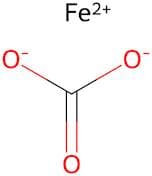
Ferrous carbonate, with the chemical formula FeCO₃ and CAS number 563-71-3, is an inorganic compound that consists of iron in the +2 oxidation state and carbonate ions. It typically appears as a pale green or grayish solid and is insoluble in water, although it can dissolve in acidic solutions, releasing carbon dioxide. Ferrous carbonate is often found in nature as the mineral siderite and is used in various applications, including as a dietary supplement for iron deficiency and in the production of iron and steel. It can also serve as a precursor for other iron compounds. The compound is relatively stable under normal conditions but can oxidize to ferric oxide in the presence of air or moisture. Safety considerations include its potential to cause irritation upon contact with skin or eyes, and it should be handled with appropriate precautions. Overall, ferrous carbonate plays a significant role in both industrial applications and biological systems.
Formula:CFeO3
InChI:InChI=1/CH2O3.Fe/c2-1(3)4;/h(H2,2,3,4);/q;+2/p-2
InChI key:InChIKey=JDEGMUDWFRGZDH-UHFFFAOYSA-N
SMILES:C(=O)(O)O.[Fe]
Synonyms:- Blaud's mass
- Carbonic acid, iron(2+) salt (1:1)
- Ferronil
- Ferrous Carbonate Saccharated
- Ferrous carbonate
- Ferrous monocarbonate
- Hsdb 458
- Iron (II) Carbonate, Saccharated
- Iron II carbonate
- Iron carbonate (FeCO3)
- Iron carbonate (FeCO<sub>3</sub>)
- Iron(2+) carbonate
- Unii-Mz3Q72U52O
- blaud’smass
- Carbonic acid iron(II)
- ferrous carbonate、Siderite
- Carbonic acid iron(2+) salt
- ironcarbonate
- FERROUS CARBONATE USP/EP/BP
- ironcarbonate(feco3)
- CARBONICACID,IRON(II)SALT
- carbonicacid,iron(2++)salt(1:1)
- See more synonyms
Sort by
The purity filter is not visible because current products do not have associated purity data for filtering.
Found 4 products.
Ferronil
CAS:Ferronil is a corrosion inhibitor that prevents the formation of rust, or iron oxide, on metal surfaces exposed to water vapor. Ferronil contains ferrous sulfate and potassium dichromate, which react with carbon dioxide in the air to form water vapor and ferric oxide. This reaction is accelerated by the presence of oxygen, which is why Ferronil should not be used in environments where there is a lack of air circulation. Ferronil has been shown to reduce the corrosion rates of steel at high temperatures in wastewaters and other environments. Ferronil's mechanism of action is complex and involves transfer reactions between iron ions and other metal ions such as sodium carbonate or potassium dichromate.Formula:FeCO3Color and Shape:Slightly Yellow PowderMolecular weight:115.85 g/mol