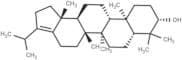
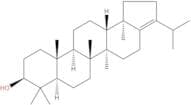
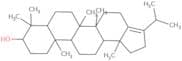
CAS 564-14-7
:(3beta)-hop-17(21)-en-3-ol
Description:
The chemical substance known as (3beta)-hop-17(21)-en-3-ol, with the CAS number 564-14-7, is a natural compound classified as a triterpenoid. It is primarily derived from hops (Humulus lupulus), which are commonly used in brewing beer. This compound exhibits a complex structure characterized by a cyclopentane ring and multiple double bonds, contributing to its unique properties. (3beta)-hop-17(21)-en-3-ol is known for its potential biological activities, including anti-inflammatory, antioxidant, and antimicrobial effects. Additionally, it may play a role in the flavor and aroma profile of hops, influencing the sensory characteristics of beer. The compound is also of interest in pharmacological research due to its potential therapeutic applications. Its solubility is generally low in water but can dissolve in organic solvents, making it suitable for various extraction and formulation processes in both food and pharmaceutical industries. Overall, (3beta)-hop-17(21)-en-3-ol is a significant compound with diverse applications and health-related properties.
Formula:C30H50O
InChI:InChI=1/C30H50O/c1-19(2)20-11-15-27(5)21(20)12-17-29(7)23(27)9-10-24-28(6)16-14-25(31)26(3,4)22(28)13-18-30(24,29)8/h19,22-25,31H,9-18H2,1-8H3/t22-,23+,24+,25-,27-,28-,29+,30+/m0/s1
Synonyms:- (3Β)-Hop-17(21)-En-3-Ol
Sort by
Purity (%)
0
100
|
0
|
50
|
90
|
95
|
100
Found 3 products.
Hop-17(21)-en-3-ol
CAS:Hop-17(21)-en-3-ol is a natural product of Gentiana, Gentianaceae.Formula:C30H50OPurity:98%Color and Shape:SolidMolecular weight:426.72Hop-17(21)-en-3β-ol
CAS:Controlled ProductHop-17(21)-en-3β-ol is a natural triterpenoid alcohol, which is primarily sourced from the hop plant, Humulus lupulus. This secondary metabolite is part of the lupane group of triterpenoids, compounds that are well-documented in the plant kingdom for their diverse biological activities. The mode of action of Hop-17(21)-en-3β-ol involves interactions at the cellular level that can influence various biochemical pathways, though the precise mechanisms may vary depending on the context of study.Formula:C30H50OPurity:Min. 95%Molecular weight:426.7 g/mol