CAS 56578-35-9
:2-Propenal,3-(4-methylphenyl)-, (2E)-
Description:
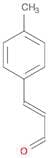
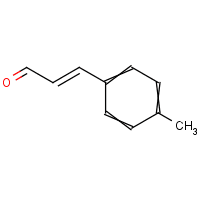
2-Propenal, 3-(4-methylphenyl)-, also known as 4-methylcinnamaldehyde, is an organic compound characterized by its structure, which features a propenal (or aldehyde) functional group attached to a phenyl ring with a methyl substituent at the para position. This compound typically appears as a colorless to pale yellow liquid with a distinctive aromatic odor. It is soluble in organic solvents and exhibits moderate solubility in water. The presence of the aldehyde group contributes to its reactivity, making it susceptible to nucleophilic attacks, and it can participate in various chemical reactions, including condensation and polymerization. Additionally, 4-methylcinnamaldehyde is of interest in the fragrance and flavor industry due to its pleasant scent, and it may also have applications in organic synthesis and as a potential intermediate in the production of other chemical compounds. Safety data indicates that it should be handled with care, as it may cause skin and eye irritation.
Formula:C10H10O
Synonyms:- 2-Propenal,3-(4-methylphenyl)-, (E)-
- (E)-3-(4-Methylphenyl)-2-propenal
- (E)-3-(4-Methylphenyl)acrolein
- (E)-4-Methylcinnamaldehyde
- (E)-p-Methylcinnamaldehyde
- trans-4-Methylcinnamaldehyde
- trans-p-Methylcinnamaldehyde
Sort by
Purity (%)
0
100
|
0
|
50
|
90
|
95
|
100
Found 5 products.
2-PROPENAL, 3-(4-METHYLPHENYL)-,(2E)
CAS:Formula:C10H10OPurity:95%Color and Shape:SolidMolecular weight:146.18584-Methyl-cinnamaldehyde
CAS:4-Methyl-cinnamaldehydeFormula:C10H10OPurity:95%Color and Shape: off white to light yellow crystalline solidMolecular weight:146.19g/mol(E)-3-(p-Tolyl)acrylaldehyde
CAS:(E)-3-(p-Tolyl)acrylaldehyde is a cinnamaldehyde and endogenous metabolite commonly used as a food flavoring with inhibitory effect on Coxsackievirus B3Formula:C10H10OPurity:97.60%Color and Shape:SolidMolecular weight:146.19(E)-3-(p-Tolyl)acrylaldehyde
CAS:(E)-3-(p-Tolyl)acrylaldehyde is a reactive compound that has been shown to have antibacterial activity. It also inhibits the growth of Coxsackievirus A21 by binding to cardiomyocytes and inducing apoptosis. (E)-3-(p-Tolyl)acrylaldehyde binds to the amine group of proteins, which prevents it from being hydrolysed. This inhibition leads to an accumulation of the reactive amine in the organism, causing cell death. The reaction between (E)-3-(p-Tolyl)acrylaldehyde and nitro groups in DNA can cause mutagenesis or carcinogenesis.
Formula:C10H10OPurity:Min. 98 Area-%Color and Shape:PowderMolecular weight:146.19 g/mol(E)-3-(p-Tolyl)acrylaldehyde
CAS:Formula:C10H10OPurity:95%Color and Shape:SolidMolecular weight:146.189