CAS 5663-56-9
:2-(3,4-Dimethoxyphenyl)acetamide
Description:
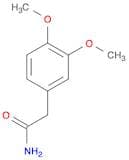
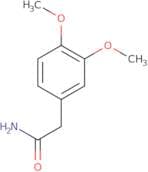
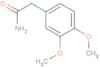
2-(3,4-Dimethoxyphenyl)acetamide, with the CAS number 5663-56-9, is an organic compound characterized by its acetamide functional group attached to a substituted phenyl ring. The presence of two methoxy groups (-OCH3) on the aromatic ring enhances its solubility in organic solvents and may influence its biological activity. This compound typically appears as a white to off-white solid and is soluble in polar organic solvents. Its molecular structure suggests potential applications in medicinal chemistry, particularly in the development of pharmaceuticals, due to the presence of the acetamide moiety, which is often associated with various biological activities. The methoxy substituents can also modulate the electronic properties of the phenyl ring, potentially affecting the compound's reactivity and interaction with biological targets. As with many organic compounds, safety data should be consulted for handling and usage, as well as any relevant regulatory information.
Formula:C10H13NO3
InChI:InChI=1/C10H13NO3/c1-13-8-4-3-7(6-10(11)12)5-9(8)14-2/h3-5H,6H2,1-2H3,(H2,11,12)
InChI key:InChIKey=CUWOZWFDSYIYHL-UHFFFAOYSA-N
SMILES:O(C)C1=C(OC)C=C(CC(N)=O)C=C1
Synonyms:- 3,4-Dimethoxybenzeneacetamide
- 3,4-Dimethoxyphenylacetamide
- Acetamide, 2-(3,4-dimethoxyphenyl)-
- Acetamide, 2-(3,4-dimethoxyphenyl)- (6CI,8CI)
- Benzeneacetamide, 3,4-dimethoxy-
- Brn 2647747
- Nsc 73172
- 2-(3,4-Dimethoxyphenyl)acetamide
- 4-10-00-01509 (Beilstein Handbook Reference)
- 2-(3,4-Dimethoxyphenyl)acetamide
- verapamil impurities954
- Dopamine Impurity 26
- HOMOVERATRAMIDE
- 3,4-dimethoxy-benzeneacetamid
- Dopamine Impurity 30
- Dobutamine hydrochloride impurity3
- Hydroquinone-C14
- See more synonyms
Sort by
Purity (%)
0
100
|
0
|
50
|
90
|
95
|
100
Found 2 products.
3,4-DIMETHOXYPHENYLACETAMIDE
CAS:Formula:C10H13NO3Purity:98%Color and Shape:SolidMolecular weight:195.2151Homoveratramide
CAS:Homoveratramide is a synthetic drug that is used as an antibacterial agent. It has a broad spectrum of activity against bacteria, fungi, and protozoa. Homoveratramide has been shown to be effective against both Gram-positive and Gram-negative bacteria, including Staphylococcus aureus, Streptococcus pneumoniae, Escherichia coli, Salmonella enterica, Pseudomonas aeruginosa, and Klebsiella pneumoniae. Homoveratramide inhibits the synthesis of DNA by binding to the enzyme ribonucleotide reductase. This produces a bacteriostatic effect on the cell by halting DNA replication and transcription.
Formula:C10H13NO3Purity:Min. 95%Color and Shape:PowderMolecular weight:195.22 g/molRef: 3D-FH70681
Discontinued product