CAS 56683-56-8
:Methyl 2,3,5,6,8,9,11,12-octahydro-1,4,7,10,13-benzopentaoxacyclopentadecin-15-carboxylate
Description:
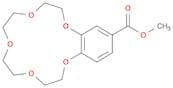
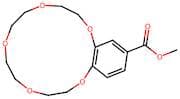
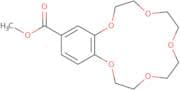
Methyl 2,3,5,6,8,9,11,12-octahydro-1,4,7,10,13-benzopentaoxacyclopentadecin-15-carboxylate, with CAS number 56683-56-8, is a complex organic compound characterized by its unique polycyclic structure that incorporates multiple oxygen atoms within its framework. This compound features a carboxylate functional group, which contributes to its potential solubility in polar solvents and may influence its reactivity. The presence of multiple rings and oxygen atoms suggests that it may exhibit interesting chemical properties, such as the ability to participate in hydrogen bonding and possibly act as a ligand in coordination chemistry. Its structural complexity may also indicate potential applications in pharmaceuticals or materials science, although specific uses would depend on further research into its biological activity and stability. As with many organic compounds, its physical properties, such as melting point, boiling point, and solubility, would need to be determined experimentally to fully understand its behavior in various environments.
Formula:C16H22O7
InChI:InChI=1S/C16H22O7/c1-18-16(17)13-2-3-14-15(12-13)23-11-9-21-7-5-19-4-6-20-8-10-22-14/h2-3,12H,4-11H2,1H3
InChI key:InChIKey=PMGUUVHWCHSZKY-UHFFFAOYSA-N
SMILES:C(OC)(=O)C=1C=C2C(=CC1)OCCOCCOCCOCCO2
Synonyms:- 1,4,7,10,13-Benzopentaoxacyclopentadecin-15-carboxylic acid, 2,3,5,6,8,9,11,12-octahydro-, methyl ester
- Methyl 2,3,5,6,8,9,11,12-octahydro-1,4,7,10,13-benzopentaoxacyclopentadecin-15-carboxylate
Sort by
Purity (%)
0
100
|
0
|
50
|
90
|
95
|
100
Found 3 products.
4'-Methoxycarbonylbenzo-15-crown 5-ether
CAS:4'-Methoxycarbonylbenzo-15-crown 5-etherPurity:≥95%Molecular weight:326.34g/mol4'-Methoxycarbonylbenzo-15-crown 5-ether
CAS:4'-Methoxycarbonylbenzo-15-crown 5-ether (4MBC) is a gestational, microstructural, extracellular and thermodynamic teratogen that has been shown to have a high level of resistance to hyaluronidase. 4MBC binds to hyaluronic acid, which is a component of the synovial fluid in the joints. The binding of 4MBC to hyaluronic acid results in inhibition of cartilage growth, which leads to joint degradation. This drug also has been shown to cause fetal bovine serum proteins to precipitate. 4MBC is associated with an increased risk for body mass index (BMI) greater than 30 kg/m2 and an increased risk of radiofrequency ablation (RFA) for benign uterine masses.Formula:C16H22O7Purity:Min. 95%Color and Shape:White PowderMolecular weight:326.34 g/mol