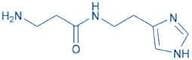
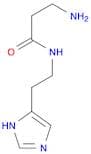
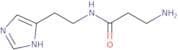
CAS 56897-53-1
:Carcinine
Description:
Carcinine, with the CAS number 56897-53-1, is a naturally occurring compound that is a derivative of the amino acid histidine. It is characterized by its role in various biological processes, particularly in the context of cellular metabolism and antioxidant activity. Carcinine is known for its potential neuroprotective properties, as it may help mitigate oxidative stress in neuronal cells. Structurally, it features a unique imidazole ring, which contributes to its biochemical reactivity and interactions within biological systems. The compound has garnered interest in research related to cancer biology and aging, as it may influence cellular signaling pathways. Additionally, carcinine is soluble in water, which facilitates its biological functions. While it is not widely recognized as a therapeutic agent, its presence in certain tissues and its metabolic implications make it a subject of ongoing scientific investigation. Overall, carcinine represents a fascinating area of study within biochemistry and pharmacology, with potential implications for health and disease.
Formula:C8H14N4O
InChI:InChI=1S/C8H14N4O/c9-3-1-8(13)11-4-2-7-5-10-6-12-7/h5-6H,1-4,9H2,(H,10,12)(H,11,13)
InChI key:InChIKey=ANRUJJLGVODXIK-UHFFFAOYSA-N
SMILES:C(CNC(CCN)=O)C1=CN=CN1
Synonyms:- 3-Amino-N-[2-(1H-imidazol-4-yl)ethyl]propanamide
- 3-Amino-N-[2-(1H-imidazol-5-yl)ethyl]propanamide
- Alistin
- Carcinine
- Decarboxycarnosine
- N-[2-(1H-imidazol-5-yl)ethyl]-beta-alaninamide
- N-[2-(1H-imidazol-5-yl)ethyl]-beta-alaninamide dihydrochloride
- Propanamide, 3-amino-N-(2-(1H-imidazol-4-yl)ethyl)-
- Propanamide, 3-amino-N-[2-(1H-imidazol-5-yl)ethyl]-
- beta-Alanylhistamine
- β-Alanylhistamine
Sort by
Purity (%)
0
100
|
0
|
50
|
90
|
95
|
100
Found 4 products.
Carcinine
CAS:Carcinine was originally discovered in the cardiac tissue of the crustacean Carcinus maenas. Both carnosine and carcinine act as natural antioxidants with hydroxyl-radical-scavenging and lipid-peroxidase activities. Unlike carnosine, carcinine is not a substrate for carnosinase or other dipeptidases. Therefore it may play a greater role in the prolongation and potentiation of physiological responses to the therapeutical treatments. Carcinine forms complexes with Cu(II).Formula:C8H14N4OPurity:> 99%Color and Shape:White PowderMolecular weight:182.23N-(2-(1H-Imidazol-5-yl)ethyl)-3-aminopropanamide
CAS:Formula:C8H14N4OPurity:%Molecular weight:182.2230Carcinine hydrochloride salt
CAS:Carcinine is a natural compound that inhibits the activities of enzymes involved in energy metabolism, including carnosine, which is a dipeptide found in muscle and brain tissue. Carnosine has been shown to be effective against eye disorders such as glaucoma and optic nerve degeneration, as well as cardiac effects. Carcinine has also been shown to inhibit histamine release, which may be due to its ability to suppress the activation of toll-like receptor 4 by lipopolysaccharides or its ability to inhibit the production of pro-inflammatory cytokines. Carcinine hydrochloride salt is a model system for studying carcinine's interactions with carnosine in vivo and in vitro.Formula:C8H14N4O·XHClPurity:Min. 95%Carcinine
CAS:Carcinine ditrifluoroacetate is a H3 receptor antagonist.Formula:C8H14N4OPurity:98%Color and Shape:SolidMolecular weight:182.22